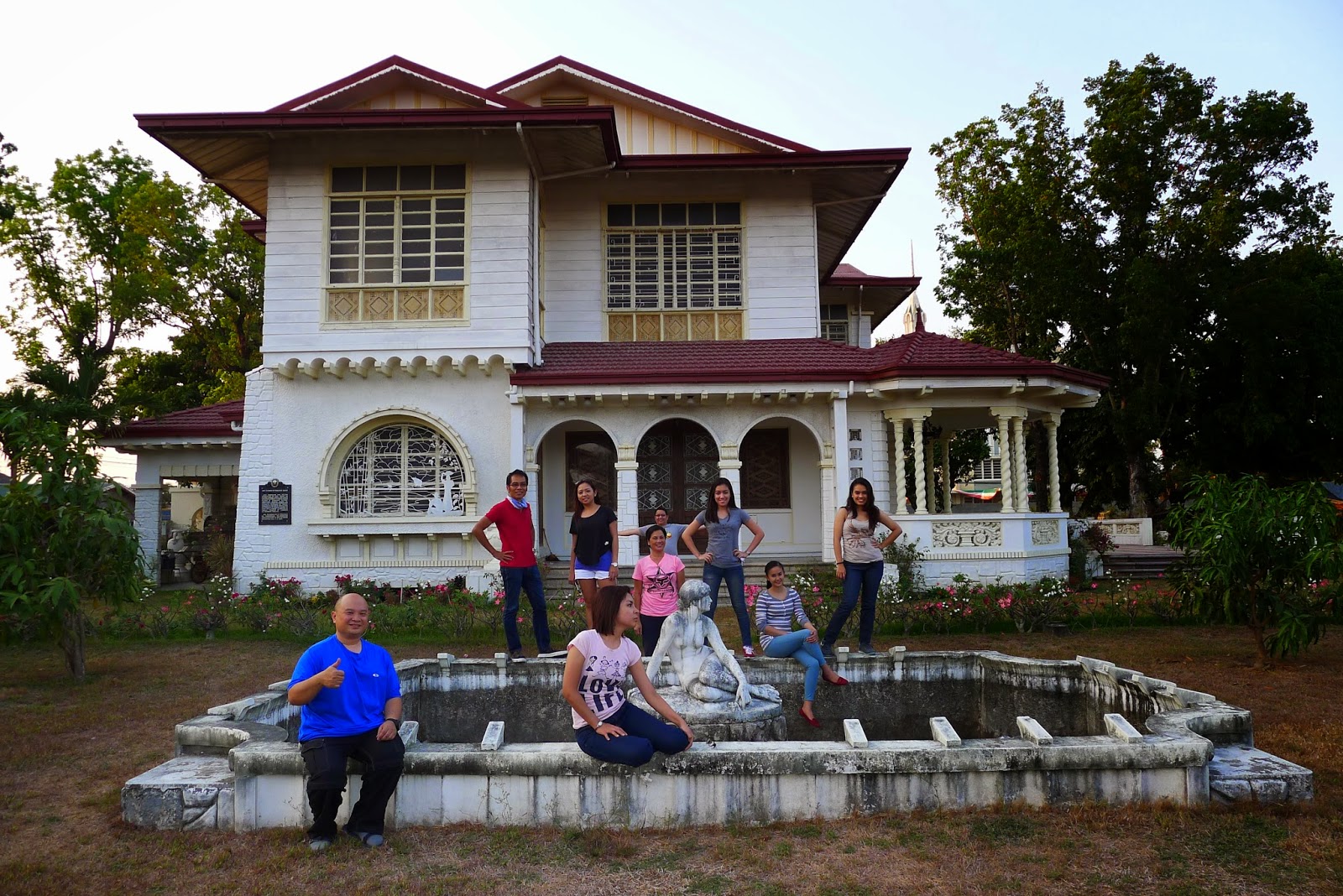
I have been to several places here in Luzon, but all of them were only centered on historical sites, mountains, waterfalls, and food trips.
Around April 2014, a friend of mine, sent me a shared link via Facebook regarding information on a trip to a less-known place called Cagbalete Island, situated in Mauban, Quezon.
Since I was not an avid fan of islands due to the fact that I do not know how to swim, I was not then inclined to give it a go, but eventually, I realized…hmmmm…why not give this aspect a try.
So on May 1-2, 2014, we embarked on a trip to faraway Cagbalete Island to fulfill my very first island overnight trip.
DAY 1: MAY 1, 2014
We assembled at the JAC Liner bus terminal at Kamias, EDSA, QC and the Lucena-bound vehicle departed at 12:30 AM. Our destination was the Lucena Grand Terminal and we paid a fare of Php 218.00 each.
 |
| JAC Liner (Kamias, Cubao, Quezon City) |
Arriving at 3:45 AM at the Lucena Grand Terminal, various eateries were already open to cater to hungry travelers who would want a super early breakfast. Pasalubong outlets can also be seen here, wherein you could already buy food items and water before proceeding to Mauban, Quezon.
 |
| Arrival @ Lucena Grand Terminal |
 |
| Various Eateries |
 |
| Pasalubong Outlets |
We departed at 4:30 AM via a Mauban-bound NCR Lines non-aircon bus, and the fare from Lucena to Mauban was Php 54.00.
 |
| Mauban-bound NCR Lines bus |
At around 6:30 AM, we were already in Mauban. We dropped by a local grocery in order to buy food in easy-open cans, junk food, and mineral water. Yes, it is better to buy these necessary items before you arrive at Cagbalete Island.
A few walks from the grocery, we arrived at the Gat Uban Park, at the end of Gomez St., along the sea wall, which had a statue of the legendary Dumagat warrior and town hero Gat Pangil (also known as Gat Uban because of his gray hair).
 |
| Gat Pangil monument |
 |
| Sunrise @ Gat Uban Park |
We also visited the St. Bonaventure Church, which underwent a lot of rebuilding since it was first built in 1647. The present church was built in 1891.
 |
| St. Bonaventure Church (Facade) |
 |
| St. Bonaventure Church (Altar) |
The façade of the Mauban Municipal Hall had 2 old cannons bestowed by Spanish Gov.-Gen. Rafael Maria Aguilar to the town as a reward for the rescue efforts done for the Spanish friars captured by Moro pirates. The cannon were later used against the Spanish to effect the surrender of Tayabas to the revolutionaries in 1898. They were restored on April 16, 2004.
 |
| Vintage Cannon @ Mauban Municipal Hall |
We then proceeded to the Daungan Port, where the boats to Cagbalete Island were docked.
At the Brgy. Daungan Multi-Purpose Hall, we went to the Tourism Information and Ticketing Booth and paid the Php 40.00 terminal fee and the Php 30.00 environmental fee per head.
 |
| Brgy. Daungan Multi-Purpose Hall |
Passenger boats here depart at 9:00 AM and 4:00 PM only, that is why you should arrive early and secure a ticket due to the influx of a lot of travelers.
While waiting for our boat to depart, we saw several children making a living by diving into the water once a tourist hurls a coin.
 |
| Earning a Living...the "hard" way! |
Our boat left the port past 9:00 AM and safely arrived at around 10:30 AM at the Sabang Port in Cagbalate Island.
In order to maximize time, rather than walk our way towards our venue for accommodation, Villa Cleofas, which would entail 30 minutes, we decided to rent a private boat, which would bring us faster to our target place, and that was when we met our bangkero, Mr. Marte Fortunado.
 |
| Boat Ride from Sabang Port to Villa Cleofas Area |
Arriving at the island side where Villa Cleofas was near, we docked at a rocky area, which was so far from the shore due to low tide. Thus, we had no choice but to walk a long way from our boat towards Villa Cleofas. The long trudge consisted of some slippery stones, various land forms, and some species trapped among some rocks.
 |
| Arrival at the Shore |
 |
| The Terrain of the Shore |
 |
| More Terrain of the Shore |
One major feature of Cagbalete Island would be the wavy sand formations appearing during low tide.
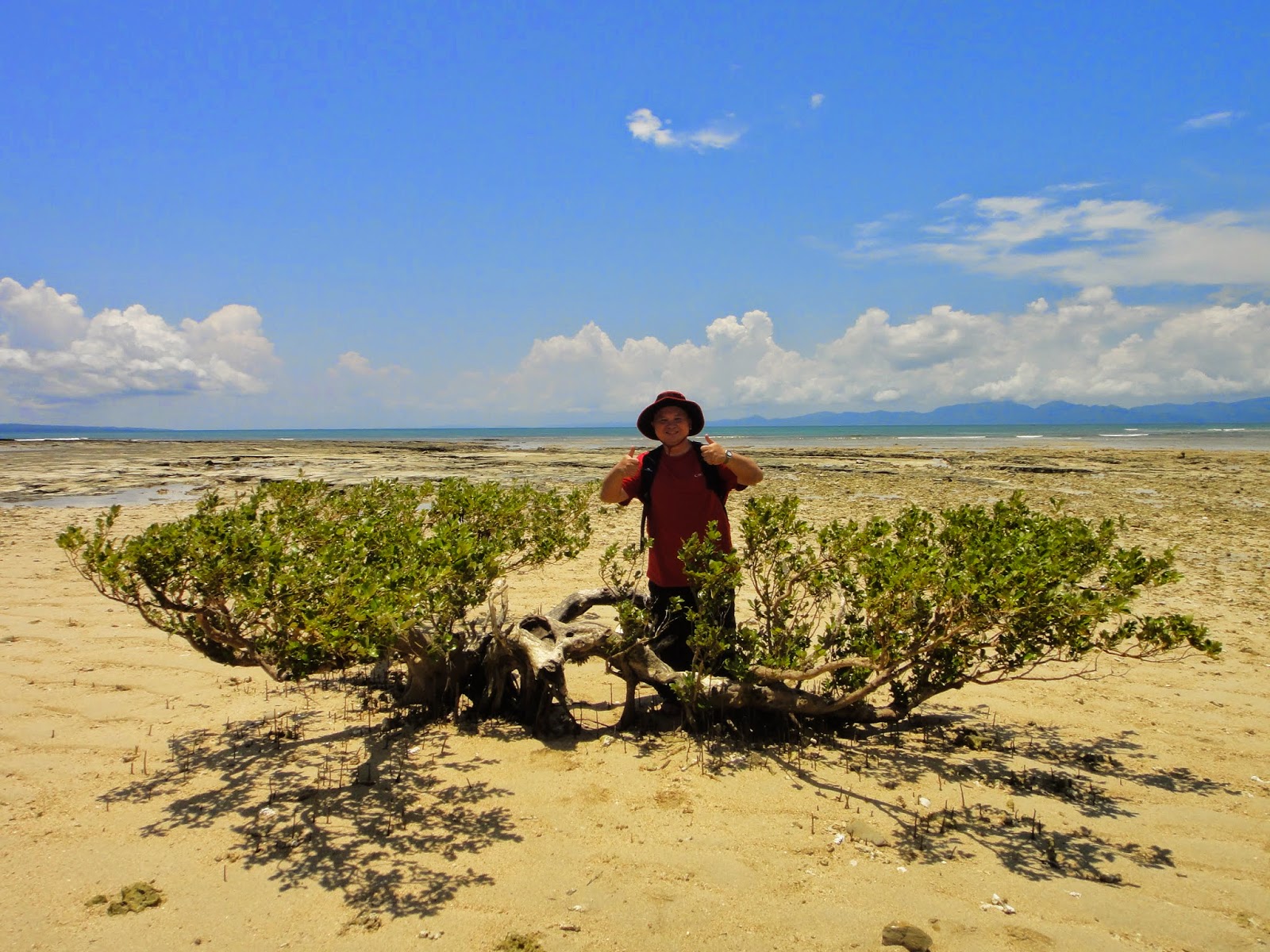 |
| A Mangrove |
 |
| Walking towards Villa Cleofas |
 |
| Threading a Watery Area |
 |
| Wavy Sand Formations |
As we finally entered Villa Cleofas, we went straight to the restaurant area, and just ordered rice and softdrinks for lunch. In Cagbalete Island, if you want to have lunch served there, you should inform your accommodation contact first that you want to eat there and tell the person what type of food you want so they would know what to buy in the market, which would be bought near the Daungan Port. Unfortunately, we did not order in advance, that was why we bought food items at a local grocery when we arrived at Mauban. Our main courses for lunch were just Corned Tuna and Tuna Paella from easy-open cans, and were just heated at the restaurant.
 |
| Villa Cleofas |
 |
| Villa Cleofas Restaurant |
 |
| Eating our "Koboy" Lunch |
After paying for the rice and their “heating” services, as well as for our accommodation, which was a Medium Cottage that can handle up to 12 pax, worth Php 3,000.00 for an overnight stay, we then entered the cottage to unload our stuff and refreshed ourselves. Our cottage was just a fan-room type, and with a private toilet and bathroom, located at the back of the cottage.
 |
| Medium Cottage |
Electricity in Cagbalete Island only runs from 6:00 PM to 5:00 AM since they only use a generator.
Also, make sure to bring mosquito repellent when visiting this island. There are several roaming around, even inside bathrooms and toilets.
At 2:00 PM, we sped off via the same rented boat going towards Baliscar Island in order to view an old lighthouse situated there.
 |
| Nearing Baliscar Island |
After around half an hour we arrived just near the island, but due to rough waters, which would pose as danger if ever we decide to dock, we just decided to just take faraway photos of the famous lighthouse to our dismay.
 |
| Old Lighthouse @ Baliscar island |
Traveling back to Cagbalete Island, the boat dropped anchor on a certain spot, and my companions went snorkeling around the said area. Problem was there were several sea urchins at the bottom, so they just stayed almost at the surface of the water.
 |
| Water Bliss! |
We then arrived back at the island at around 4:30 PM to refresh ourselves at our cottage, and began strolling along the shore, doing photo ops, as well as visiting some resorts along the way.
 |
| Nature's Beauty! |
 |
| Joven's Beach Resort |
 |
| Villa Noe Beach Resort |
At 7:00 PM, we went to the restaurant to order Steamed Lapu-Lapu (Php 200.00) and Barbeque (Php 40.00) for Dinner. Cost for paluto ng Lapu-Lapu was Php 150.00.
 |
| Dinnertime! |
The day ended with us sleeping with only two electric fans and some mosquitoes hovering around grrrrrr.
DAY 2: MAY 2, 2014
As what I have always been doing once I am on a beach or island, I woke up at 4:30 AM and rushed to the spot where the sunrise occurs. While Indian-sitting on the sand with a mini bench acting as my tripod, the sun appeared at around 5:30 AM.
 |
| Couple Enjoying the Sunrise |
After eating breakfast of Corned Tuna from an easy-open can coupled with Tasty bread, we went back to our cottage to check out and proceeded to our next tourist spot via a private boat anew.
 |
| Breakfast Enjoyment! |
 |
| Departure from Villa Cleofas |
Mang Marte, the boatman, took us to the western side of the island, which they called “Cagbalete Dos”. Actually, the place where majority of the tourists stay is “Cagbalete Uno”.
As we entered Cagbalete Dos, there was a boat, owned by the Barangay in that place, who collected a certain fee from our boatman. According to Mang Marte, all boats coming from Cagbalete Uno would pay a fee in order to enter the realm of Cagbalete Dos. I just forgot the reason why.
 |
| Approaching "Cagbalete Dos" |
 |
| Getting off the Boat far from the Shore |
Anyway, here at Cagbalete Dos, when low tide occurs, you could easily get off the boat and enjoy the clear waters at only less than 5 feet deep, with a majority of sand at the bottom and some rocks. Only a handful of visitors can be seen in this area since the only way you could experience this place was to rent a private boat. Mangroves can also be seen here.
 |
| Water Enjoyment! |
 |
| That's how far we were from the shore |
 |
| The Mangroves |
After enjoying this wonderful hidden place, we sped off near Sabang Port and had lunch at the boatman’s residence.
 |
| Enjoying Lutong Bahay Lunch ala Cagbalete! |
 |
| Group Shot at the Boatman's Residence |
We departed from the island at 2:30 PM via private boat anew and left Mauban town proper at 4:30 PM via a Lucena-bound NCR Lines non-aircon bus.
 |
| Departure from Mauban to Lucena |
Cagbalete Island may have been listed lately as one of eight great islands in the Philippines in a May 2014 magazine, but sadly it still ain’t that popular maybe due to lack of promotion from the Department of Tourism as well as the media. All I could say is that, this island is definitely worth the trip and if you browse further into the internet through travel blogs, your guess is as good as mine.
Explore Pinas!