Wednesday, January 11, 2023

Old Gapan: The Little Vigan (Nueva Ecija)


For heritage preservation enthusiasts, it would definitely be of no surprise that the historic City of Vigan, situated in Ilocos Sur, would rank as one of the top tourist destinations in the Philippines that visitors would adore to set foot on its nostalgic splendor. A so-called heritage village, 405 kilometers from Manila, Vigan has been recognized as a UNESCO World Heritage Site since December 1999 for both its distinctive Spanish colonial history in Asia and its impressive collection of 16th-century Spanish-built structures.

Fortunately, the town of Gapan in Nueva Ecija, one of the oldest in the country, founded in 1595, has now been transformed as a must-see location for advocates of nostalgia. Lurking inside this town is a place called “Old Gapan” or “Lumang Gapan”, a tourism project in 2021, which was spearheaded by Gapan Mayor Emeng Pascual, in order to reawaken interest in the city’s historic roots. 

With a total travel distance of only 90 kilometers from Manila, we now explore “Old Gapan”, dubbed as the “Little Vigan” by loads of netizens out there.

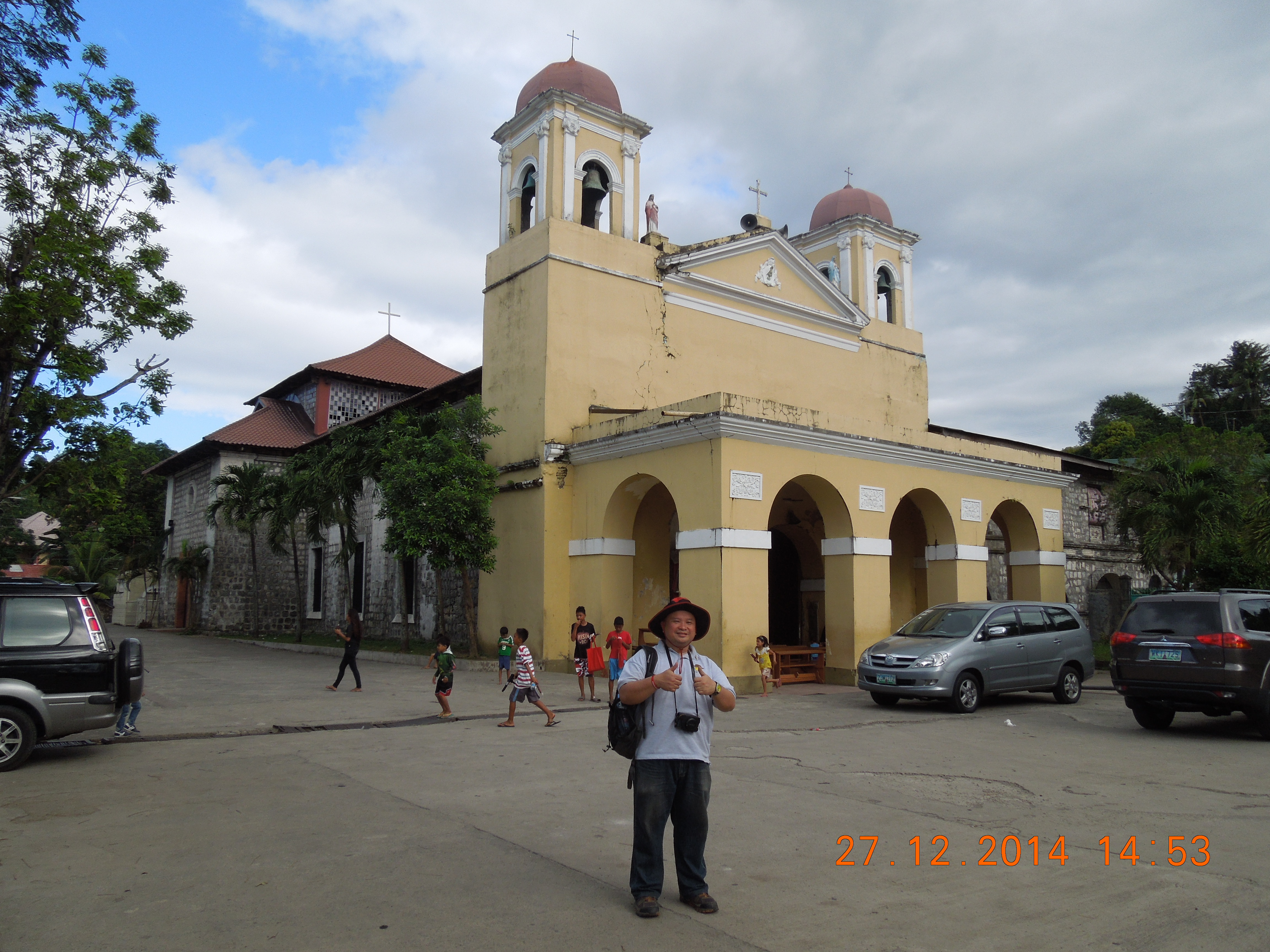
The Three Kings Parish, the canonical name of the National Shrine of La Virgen Divina Pastora, was established in 1589. It is the oldest and largest colonial church in Nueva Ecija, and one of the oldest Roman Catholic churches in the nation.

National Shrine of La Virgen Divina Pastora

The Cuison Ancestral House is also known as Doña Martha Cuison ancestral house, her husband is Mr. Agustin Cuison who is part Chinese. She is well-known for her charitable work in the area.

Cuison Ancestral House

Munting Bulwagan, a postwar house, is the home and office of the Zabat Band, the first local brass band in the Philippines, which gives free music lessons to kids. It was Eliodoro Chico y Bustamante, a Tagalog priest, who organized the first local band in Gapan, Nueva Ecija on November 22, 1820. He installed his relative, Lorenzo Zabat y Chico, to manage the band. Mariquita Garcia Gutierrez Zabat is the spouse of Lorenzo Zabat.

Munting Bulwagan

Casa De Guzman

Casa Payawal is owned by Gervacio Payawal.

Casa Payawal

Casa De Guzman is owned by Ada de Guzmán.

Casa De Guzman

Casa Goduco is owned by Adang Goduco. It has a plaque above its door that says "Enero 1927."

Casa Goduco

Casa Goduco

Casa Peralejo is connected to the clan of actress Rica Peralejo.

Casa Peralejo

This is the Silvino Valdes - Bárbara Agno HouseAccording to actress Eula Valdes, a great-great-granddaughter of the couple, her great-great-grandparents built the house in the 1800s.

Silvino Valdes - Bárbara Agno House

Casa Payawal was originally owned by Exequiel Payawal. It was later sold to Carmelita Pita Cabatuando, and then to Joe Taruc, the famous broadcast journalist, and is now owned by Gapan Mayor Emeng Pascual.

Casa Payawal

The old municipal building of Gapan has the years 1732 and 1896 on its doorway with a gun and sword. This was restored by the National Historical Commission of the Philippines back in 2017. The building also served as the Post Office of Gapan City. This was also used to be a school owned by the Bauzon family. It also served other functions, such as the Court of First Instance, Telegraph Office and Municipal Prison.

Gapan Presidencia & Museum

Tagpuan sa Lumang Gapan is a food park catering to customers on evenings.

Tagpuan sa Lumang Gapan

The former Southern Nueva Ecija College building is now owned by the Bauzon family.

Former Southern Nueva Ecija College building

Casa Morales was originally owned by Doña Vicenta Morales. Later, it was sold to Doroteo Liwag.

The Casa De Teodoro Navarro y Matilde Garces Navarro was built in 1927 by Teodoro Navarro, whose initials can be seen in a doorway of the house. His wife is Matilde Garces Navarro.

Casa Morales & Casa De Teodoro Navarro y Matilde Garces Navarro

Casa Morales is owned by Luís Morales.

Casa Morales

Casa Morales is owned by Dr. Arsenio Morales.

Casa Morales

Casa Mendoza is owned by Dr. Bienvenido Mendoza, a dentist.

Casa Mendoza

This is the Nida Blanca Ancestral House. Dorothy Jones (a.k.a. Nida Blanca) was born in Gapan to an American soldier Jose Zobel Acueza Jones of mestizo descent and a Filipino mother with Tagalog roots, Inocencia Velez Guinto.

Nida Blanca Ancestral House

Cap your historical day by travelling less than 6 kilometers from Gapan as you arrive at the Sideco House, located at Vallarta Street, San Isidro, Nueva Ecija. During General Emilio Aguinaldo's stay in San Isidro, the house owned by Captain Crispulo Sideco (Kapitan Crispulo "Pulong" Sideco) served as the de facto residence and office of Aguinaldo as president.

Sideco House

Old Gapan may not exude the amazing vintage aura of the original Vigan, but given its huge proximity to Manila, as well as what it can simply offer, this tourist destination in Central Luzon is still definitely worth the trip.

Explore Pinas!  

Friday, January 6, 2023

Tagalag Fishing Village (Valenzuela)


Valenzuela, officially the City of Valenzuela, which is the 6th most populous city in the National Capital Region, has always been known in the tourism industry as a place abounded with several parks, wherein the most notable would be the Valenzuela City People's Park, coupled with various historical structures, such as the Museo Valenzuela.

With tourists constantly being magnetized by various well-known areas offering eye-popping features such as beaches, mountains, ingrained culture, heritage villages, local cuisine, and many more, it is but natural for some local government units to further step up to the plate in order to entice more visitors to flock towards their vicinity.

Fortunately, it took 22 years from its conversion to cityhood in 1998 for Valenzuela to finally showcase their so-called “best kept secret”, which I believe is now the city’s most famous tourist destination.

A far cry from just a simple barangay surrounded by fishpens, which would barely make heads turn for potential tourists, on February 15, 2020, the city government opened to the public Valenzuela’s first fishing village, the Tagalag Fishing Village, situated at Barangay Tagalag.   

This village proudly boasts of a large fishing area with a boardwalk, park, and a variety of restaurants, ranging from casual to formal, possibly catering to various tourist preferences.

A Welcome Arch along Bisig Road greets well-wishers entering the vicinity. 

Welcome Arch

Alvarez Park Cafe is an Al-Fresco restaurant with a great ambiance and reasonably priced meals. Opened in the year 2020, it is the first park cafe in Valenzuela City.

Fountain at the facade

For fans of the American action crime drama television series Knight Rider, lo and behold, they have a 1982 Pontiac Firebird Trans Am situated at the parking area for photo-ops.  

K.I.T.T. (Knight Industries Two Thousand) ???

Guests at the Alvarez Park Cafe proper can have a choice of either dining outside or in an air-conditioned area, both of which showcase a view of their fishing grounds. 

Outdoor Dining

The Fisherman's Point, which is still a part of the Alvarez Park Cafe compound, is a floating bar-restaurant offering a three-course lunch, six-course dinner, international cuisine, crafted cocktails, wine, and specialty drinks. This place is obviously for classy diners.    

The Fisherman's Point Entrance Arch

A wooden walkway leads up to the floating restaurant which incorporates a nautical design.

Wooden Walkway

The Fishing Area has the following amenities:
- Rental of fishing rods (or you may bring your own)
- Fish per kilo of Bangus and Tilapia
- Boat ride
- Kayak ride
- Rental of the Fishing Villa

Fishing Area

The Tagalag Mini Park consists of the Visitor's Center, in case you need additional information regarding the area, and the park proper, wherein one could view the Polo River.   

Visitor's Center

Tagalag Mini Park

The 17-hectare Tagalag Solar Farm is home to thousands of high-quality solar panels and is owned by Eco-Park Energy of Valenzuela Corporation. Up to 20.69 megawatts of electricity can be produced by the solar farm, which is roughly enough to power 140,000 typical Filipino homes.

Main Gate of the Tagalag Solar Farm

Solar Panels

Tata Celo Kainan sa Palaisdaan is a farm-to-table restaurant serving delicious Filipino dishes. The owner was once a fisherman. 

Tata Celo Kainan sa Palaisdaan

Filipino Cuisine Galore

Fishpond with floating nipa huts

A photo-op area atop the Polo River

Fish-shaped street signage can be seen inside the fishing village.  

Fish-shaped street signage

A visit to Tagalag Fishing Village is definitely one unique respite from the hustle and bustle of urban living. Aside from the sites I have featured here, tourists can be able to experience various fun-fishing activities in the other establishments along the village. A great place worth visiting indeed for families and friends!

Explore Pinas!    

Tuesday, December 20, 2022

Taal Heritage Village (Taal, Batangas)


Heritage villages have always been so eye-candy for loads of heritage advocates. The mere sight of even a façade of an ancestral house could easily whet the appetite of an avid enthusiast of the olden times. What more if they fortunately experience entering these “monuments” of past generations. Glancing upon the various relics from yesteryears, obtaining very interesting information regarding bits on Philippine history beyond the classroom, as well as being baffled by the intricate interior craftsmanship, would definitely bring back feelings of nostalgia in the minds of any history buff out there.

Here in the Philippines, as far as I know, there are four (4) towns/cities, which have been declared as National Historical Landmarks, and these are Pila in Laguna, Silay in Negros Occidental, the very famous Vigan in Ilocos Sur, and Taal in Batangas.

Dubbed as the Balisong & Barong Tagalog Capital of the Philippines, and founded in 1572, Taal proudly boasts a plethora of ancestral homes and heritage structures, each of which has its own unique story, as every traveler reflectively trudges the pavements, situated around 9 kilometers away from the town’s former location, the present-day San Nicolas.

The Minor Basilica of Saint Martin of Tours, also known as the Taal Basilica, is Asia's biggest church. The current church's construction started in 1755, but it wasn't finished until 1878 because of a significant earthquake that occurred in 1852. Its original location was in the city of San Nicolas today, but it was completely destroyed by the eruption of the Taal Volcano in 1754, which explains the relocation for safety purposes.

Minor Basilica of Saint Martin of Tours

The Casa Montenegro, located beside the Rizal College of Taal, is the home of Dindo Montenegro, a well-known Taal tourism advocate and tour guide. 

Casa Montenegro

Clinica Tenorio is an ancestral house, which was turned into a clinic. The process of taking an existing structure and modernizing or adapting it for a new use or purpose is known as adaptive reuse.  

Clinica Tenorio

The Villavicencio-Marella House or Wedding Gift House is an old Spanish Colonial Era house. The house was the wedding gift present of Don Eulalio Villavicencio to his wife Doña Gliceria Marella y Legaspi on the occasion of their wedding in 1871. 

Wedding Gift House

The Casa Villavicencio or Casa V is an old Spanish Colonial Era house. Built in 1850, the house was given to Don Eulalio Villavicencio upon the death of his parents. Just like most houses in Taal, this house survived the Japanese Occupation.  

Casa Villavicencio

Built in 1876, the Goco Ancestral House is a classic well preserved Bahay na Bato located in front of Casa Villavicencio. It is the house of former Ambassador Raul Goco, son of Juan Cabrera Goco, who was Treasurer of the Filipino Revolutionary Movement. 

Goco Ancestral House

La Casa Victrola is an ancestral house, which was turned into the La Casa Victrola Cafe. The cafe is owned by Chef Earl Salazar,

La Casa Victrola

This house, which dates back to the early 1900s, was restored in late 2014 while maintaining the Filipino Bahay-Na-Spanish-American-Colonial Bato's design. Following the Spanish custom of converting old castles, monasteries, and historic buildings into government-run bed & breakfast facilities, it was finished in 2015 and given the name Paradores del Castillo

Paradores Del Castillo

The San Lorenzo Ruiz Steps has 125 steps. This  staircase connects the town center, leading to the Basilica of San Martin of Tours and the Our Lady of Caysasay Shrine. The San Lorenzo Ruiz Steps is dedicated to the memory of San Lorenzo Ruiz.  

San Lorenzo Ruiz Steps

The Our Lady of Caysasay Shrine is a coral-hewn chapel in Barrio Caysasay. It was built in 1639 to replace a temporary structure built in 1611.

Our Lady of Caysasay Shrine

The Santa Lucia Well, under an old stone arch with a Marian image, is a pilgrimage site that is said to contain miraculous healing waters.  

Santa Lucia Well

The Don Leon Apacible Mansion is one of the oldest structures in Taal. Owned by Don Leon Apacible, originally from Balayan, Batangas, this house was last occupied by a descendant who became Mayor of the town. Dr. Jose Rizal, our national hero, used to frequent this place in the 1800's.

Don Leon Apacible Mansion

Fashion designer Lito Perez restored this home from the nineteenth century. The home has been converted into a bed and breakfast with a photo studio where visitors can have their photos taken while dressed in 19th-century Filipiniana attire. The residence is close to the Pansipit River, where turtles used to roam. Villa Tortuga was inspired by the Spanish word for turtle, tortuga.

Villa Tortuga

The Agoncillo-Mariño Ancestral House where the 'Mother of the Philippine Flag', Marcela Agoncillo, was born was built by her grandfather, Don Andres Mariño, around the 1780s.

Agoncillo-Mariño Ancestral House

The only camera museum in the Philippines is located in Galleria Taal, an old Spanish-era ancestral house. Camera and photography enthusiasts would love visiting this place.

Galleria Taal

Casa Asinas (1870) is owned by Rogie Reyes.  

Casa Asinas

The town's marketplace, Taal Public Market, is where you can purchase goods from the area, including delicacies and Burdang Taal items (native embroidery). 

Taal Public Market

Don Juan Boodle House serves a variety of Filipino specialties, including grilled food, regional specialties, and the most popular boodle fight food, which is made every day in the restaurant's kitchen with premium ingredients. 

Don Juan Boodle House

This historic Spanish municipal building dates back to 1845. It is the only Spanish structure in the neighborhood with a tile roof. Casa Real, Tribunal & Casa Consistorial was the previous name of the Taal Municipal Hall 

Taal Municipal Hall

The Escuela Pia is a church-run school that bears the name of the congregation founded in the 17th century by San Jose of Calansanz. This convent was built by Augustinian priests and later converted into a school for Taal children from disadvantaged families. The current structure was constructed in 1885. During the American regime, this Escuela Pia had become the main school.

Escuela Pia

The Ylagan-de la Rosa Ancestral House was built in 1800, and Don Julian Ylagan and Dona Dionisia Agoncillo-Ylagan were its first owners. Don Julian Ylagan was a prominent political figure in his day. The de la Rosa Clan later acquired ownership of the home, thus the name of the ancestral house.

Ylagan-de la Rosa Ancestral House 

The Gregorio Agoncillo Mansion is the same house where Felipe Agoncillo, the first Filipino diplomat, was born. Gregorio Agoncillo married a daughter of Gliceria Villavicencio, the recipient of the “Wedding Gift House”. 

Gregorio Agoncillo Mansion

The Taal Heritage Welcome Arch welcomes visitors to the historic town.

Taal Heritage Town Welcome Arch

As far as I am concerned, Vigan may be the most famous heritage in the Philippines based on various tourist reviews, but my vote goes to Taal, due to the fact that, apart from being astounded by the nostalgic structures surrounding the town, visitors can have the golden opportunity to actually enter some of the houses, which Vigan and Pila could not offer. 

Taal is way more than just the famous volcano. An underrated heritage town awaits your historical cravings. Explore Pinas!