Thursday, September 26, 2013

7 Lakes of San Pablo w/ Nagcarlan Cemetery Sidetrip (Laguna) - Part 2 of 2


Thank God, the rain rapidly weakened after just a few minutes.

With only 3 lakes to go to complete our “quest”, we hired tricycles anew to take us to the remaining lakes to be discovered. 

When we arrived at the bridge connecting Barangay San Lorenzo and Barangay San Buenaventura, we alighted our vehicles and took photos of Lake Palapakin. 

Lake # 5: Lake Palakpakin

Residents around the lake rely on income from fishpens and fishcages that grow cultured tilapia and silver carps. It is the shallowest among the seven lakes and utilized as a communal fishing ground. 

Sometimes you could see kids diving all the way from the bridge into the lake. 

We then zipped our way towards the next lake, which was Lake Muhikap. 

Lake # 6: Lake Muhikap

It is one of the main suppliers of water resources in the city. Its waters provide a generous source of tilapia for Metro Manila and the suburbs. 

Before arriving at our last lake, we paid the tricycle driver Php 300.00, and we were dropped at the Doña Leonila Park, which provided the best viewpoint of the Sampaloc Lake. 

Lake # 7: Sampaloc Lake
 
Considered one of the prime tourist spots in the city. This lake is dotted with floating restaurants along its shoreline that serves Filipino and Chinese cuisines. It abounds with tilapia, bangus, carp, and several species of shrimps. It is presently lined with fishpens and small cottages built on bamboo stilts. 

Since one of the main sources of livelihood in San Pablo City is Tilapia Breeding, an iconic statue of the said fish can be seen at the Park. 

Tilapia Statue

The Tilapia statue was constructed in honor of Mr. & Mrs. Jose C. Agahan, donor of the first Tilapia fingerlings on Sampaloc and Palakpakin Lakes (April 16, 1955).

At this point in time, which was around past 3:00 PM, since we have already visited all the seven lakes, we decided to have a sidetrip to the famous Nagcarlan Underground Cemetery, located in Nagcarlan, Laguna. The place closes at 4:00 PM, that was why, we believed that we could still go to that venue. 

From the Park, we climbed the Sampaloc Lake concrete stairs, which was rehabilitated and improved under the administration of President Diosdado Macapagal and City Mayor Zacarias A. Ticzon in 1965. 

Sampaloc Lake Concrete Stairs

Arriving at the top, we rode tricycles (Php 10.00 per head) and went straight to a jeepney stop area near the San Pablo Cathedral to catch a ride going to Nagcarlan, wherein the rate was Php 25.00 a head. 

Reaching our bonus destination, with only several minutes to spare before closing time, we hurriedly entered the chapel and registered in the visitor registration book owned by the National Historical Commission of the Philippines. 

The Nagcarlan Underground Cemetery is the only one of its kind in the Philippines - a burial site located inside, or more accurately, beneath a chapel. This chapel is rich in history - it was built and designed for funeral masses in 1845 by the Franciscan priest Fr. Vicente Velloc. He also directed the construction of an underground graveyard 15 feet below the chapel in 1851. 

Nagcarlan Underground Cemetery (Main Entrance)

Facade of the Chapel

During those times, only the rich and influential people were allowed to be buried inside, but after the Spanish regime, the government opened the cemetery to the locals and nearby towns. 

By the way, the chapel served as the last station of the funeral rites before entombment. The priest gave his last blessing in this area. 

Inside the Chapel

Turning right, we went down the granite steps and saw the crypt. 

Left Side of the Crypt

Right Side of the Crypt

The crypt also played an important role in our history. Throughout the Revolution of 1896 and the Filipino-American War, our fighting patriots used the crypt as a secret hideout, gathering here to plan their moves or to seek shelter. Similarly, it became a safehouse for guerillas during the World War II.

Anyway, due to the poor lighting below, coming from small yellow light bulbs and a small amount of sunlight emanating from a closed wooden window, it was really hard to read what was written in the epitaphs. 

Heading back towards San Pablo City via a jeepney ride anew, with stomachs grumbling for a whole lot more contents, we rode tricycles and arrived at the site of our supposed dinner place, located in Barangay Del Remedio at the Cocoland Compound.

Entrance Gate to Sulyap Compound

Before we saw the dinner place, as we entered the gate, on the right side you could see the Sulyap Casa De Obando Bed & Breakfast Boutique Hotel. 

Sulyap Casa De Obando Bed & Breakfast Boutique Hotel

Turning left, you could now view the Sulyap Casa de Alitagtag Bed & Breakfast Boutique Hotel, and as you walk a few steps from that place, you could now marvel staring at the Sulyap 1907 Casa De Cabay Gallery Cafe and Restaurant. 

Sulyap Casa de Alitagtag Bed & Breakfast Boutique Hotel
Sulyap 1907 Casa De Cabay Gallery Cafe & Restaurant

This is a restaurant and gallery cafe that features a theme of the Spanish colonial era in the Philippines. The restaurant offers a variety of traditional Filipino dishes and a gallery filled with a large collection of antiques that date back to 1800s. 

Our dinner: 
1.) Kulawong Puso ng Saging (Php 310.00 x 2) An original recipe of San Pablo City, served with Banana heart in smoked flavor coconut milk, cooked in fire brick stove. Topped with grilled pork. 
2.) Boneless Bangus Belly (Php 340.00 x 2) A prime choice cut of milk fish , sautéed in minced garlic. Served with sliced grilled tomatoes. 
3.) Ginataang Pusit (Php 360.00 x 2) A traditionally cooked squid in seasoned coconut milk. 
4.) Bistek Tagalog (Php 375.00 x 1) Beef Steak cooked in soy sauce & caramelized sliced onions. Cooked in fire brick stove. 
5.) Ensaladang Pako (Php 175.00 x 2) Fiddlehead Fern Salad in vinaigrette salad dressing. I forgot what beverages we ordered. 

Total bill was Php 3,767.50. 

Superb Pinoy Dining Ambience!

After the sumptuous dinner, the old Filipino way, we then departed this unique place via tricycles and arrived at the San Pablo City Medical Bus Station, wherein we rode a Cubao-bound bus at around 7:00 PM and arrived at 10:00 PM in Cubao. For me, even though I did not fully enjoyed most of the seven lakes we visited; it was the splendor of the adventure, hopping from one lake to another lake on a day-long road trip, which gives this type of trek a thumbs-up. 

Thursday, September 12, 2013

7 Lakes of San Pablo w/ Nagcarlan Cemetery Sidetrip (Laguna) - Part 1 of 2


For travel enthusiasts here in the Philippines, an expected majority would be exploring spectacular places that would constitute mountains, beaches, forests, and old structures. 

Unfortunately, for several nature lovers, one facet has been taken for granted. Another gem of nature which definitely deserves a closer look, and these are what you call lakes. 

On the southern part of the island of Luzon, the most famous province known for its lakes is Laguna, which boasts of the largest lake in the country, Laguna De Bay, but we would not be targeting that destination. 

Instead, we would be zooming in one of the cities in Laguna. 

Touted as the first city in Laguna and one of the oldest cities in the nation (1586), the City of San Pablo prides itself for its seven lakes, which is why this city was aptly called “The City of Seven Lakes.”

Our “larga” to explore all seven lakes happened last September 7, 2013, and this was our story. 

By the way, the “Seven Lakes of Sam Pablo” are seven crater lakes scattered around the City of San Pablo, all of which belong to the San Pablo Volcanic Field. 

Seven Lakes of San Pablo

Anyway, the Lucena-bound Jam Liner bus we rode departed at 5:50 AM from the Cubao terminal and we arrived safely at the San Pablo Junction, 7:50 AM. Fare was Php 135.50. 

Since most of us were not able to eat breakfast, we readily ordered quick meals at the nearby Chowking restaurant. For me, I just bought a regular-sized Bola Bola Siopao and consumed it in just a few minutes so we could move on with the trek. 

Since we were nine people, we rented three tricycles and we sped off via Schetelig Avenue towards the first lake, which was Lake Bunot, located in Barangay Concepcion. 

After we paid Php 100.00 for each driver, we just walked for a few minutes in order to get a good view of this lake. Thanks to the guidance of some of the kids around the area who were very accommodating. 

Lake # 1: Lake Bunot

It was told that during the Spanish times, some Spanish soldiers came upon a quiet lagoon and wanted to know its name for record purposes. They inquired from a man husking coconuts by the side of the lake. Thinking that the soldiers were asking for the native name of the coconut husk, the man replied, "Bunot." The Spanish soldiers left, muttering the word, thinking that it was the name of the lake. 

Bunot Lake is used primarily for floating cages operation where most of the residents derive their source of income. This lake is known for its cultured tilapia and fishpens for Nilotica fingerlings. 

After a glass of “Taho”, we trudged back to Schetelig Avenue, rode tricycles anew, and zoomed to the location of the next lake found in Barangay Sto. Angel. 

Timeout for Taho

Alighting from our trike along the highway, paying the driver Php 120.00, we walked towards our destination for around 20 minutes, inclusive of picture taking moments along the way. 

The trail towards the second lake consisted of “curtains” of “Talahib”, huge volcanic deposits, steep stairs, and rocky stream crossings. The end result was breathtaking Lake Calibato. 

A trail full of Talahib

Volcanic Deposits from Mount Banahaw

Rocky Stream Crossing

Lake # 2: Lake Calibato

It was told that the area was the domain of a Diwata (fairy) who had wanted to keep her realm free from the intrusion of mankind. Thus she was angered when they built rocky pathways that criss-crossed her valley. She caused a strong earthquake and a severe storm that transformed her valley into a lagoon. 

The villagers living on the other side of the surrounding hills, gaping at the sight they beheld the following morning, named it Lake Calibato, taken from the criss-crossing stone pathways of the valley. Cali must have been a conjunction of the Spanish "Calle" or Street, while Bato means rock or stone in the local dialect. 

Lake Calibato is the deepest of all the seven lakes and supplies the city and nearby towns with abundant fish. 

Resting for several minutes at a waiting shed back at the highway, we then took an Php 8.00 jeepney ride going to Barangay San Lorenzo to visit Lake Pandin and Lake Yambo, the third and fourth lakes respectively, who are just beside each other. 

The jeepney stopped near a sign indicating the direction of Lake Yambo, and after walking for around 20 minutes, a natural wonder appeared before our very eyes. This was Lake Pandin, and all I can say was WOW! 

Approaching Lake Pandin

Lake # 3: Lake Pandin

We rented a balsa (bamboo raft) to take us around the said lake for Php 180.00 per person. 

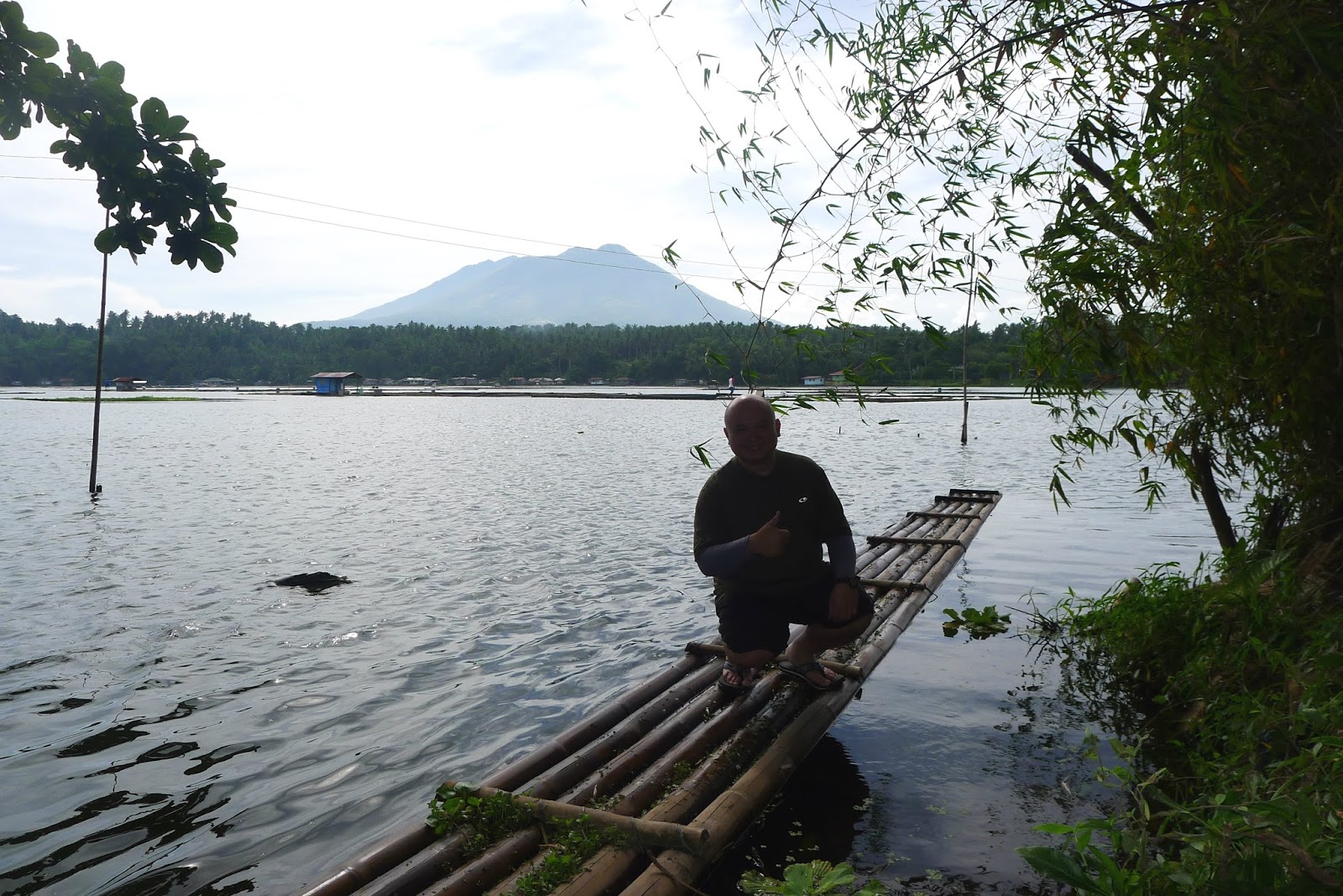
Onboard the Balsa

The boatmen utilize paddles as well as ropes tied from one end up to the other end of the entire lake to navigate the balsas.

Navigating the Balsa

When we arrived at the other side of this lake, we were told by the boatman that Lake Yambo can be viewed from the other side, and should climb a certain part at the end of Lake Pandin. 

When we trudged the slippery steps and some muddy portions uphill, we then saw Lake Yambo from the top, and since there was a trail going down that lake, the exploration continued as we took photos on the shore of that lake.
 
Lake # 4: Lake Yambo

As we went back to our raft in Lake Pandin, we were treated with fresh buco at 12:00 NN, and this was our lunch…honest. 

Fresh Buco for Lunch

Lake Pandin...Breathtaking!

Moving the balsa a bit further, we arrived at a small grotto, adorned with some statues from the Catholic religion. It had running water at a certain area, which we used to refresh ourselves. 

Since the water at Lake Pandin was so pristine, some of us went for a swim, with floaters attached. 

Swimming at Lake Pandin

Arriving back at the shore, we trekked back to the highway, only to be greeted by a sudden downpour at 1:30 PM. 

4 of 7 lakes explored! 

PART 2:

Saturday, August 31, 2013

Baler (Aurora) Part 2 of 2


DAY 2: August 25, 2013 (Sunday)

Waking up at 4:00 AM via my cellphone alarm, I then prepared myself to attend the 6:00 AM Holy Mass at the Baler San Luis Obispo Church.

Baler San Luis Obispo Church

This is a historic church constructed from stone and brick. Originally constructed in 1611, the church is dedicated to San Luis Obispo de Tolosa and is known as the site of the Siege of Baler, which took place from 1898-1899 shortly following the end of the Spanish colonization of the Philippines. The current church was built in 1939 but authentic original details may be seen inside, including the old bell, La Campana de Baler. There are markers that indicate the locations where events connected with the Siege of Baler took place. 

After the Mass, we went to the Sabang Beach area to eat breakfast at the Bay-ler View Restaurant. Most of the breakfast meals were worth Php 120.00, and I ordered Tapsilog. By the way, beef in Baler is very tasty! 

Tapsilog @ Bay-ler View Restaurant

With stomachs already full at the start of day, most of the gang went straight to the beach proper to finally experience what Baler really offers…SURFING!

Along the shore, with several surf schools nestled side by side, they “hired” the Panatag Surf School to be the ones to teach them how to perform this most famous activity here in Baler. 

Since this was their first time to surf, it was but natural that they would encounter several falls from the surfboard before they finally mastered the correct balance. Alas, most of them were successful in the end, which they were able to stand on the surfboard, while the rest just could perform it standing on their knees. 

Yup...a new form of surfing!

Good surfing posture!

The best surfing posture!

Surfing lesson rate was Php 350.00 per hour, inclusive of trainer fee and board rental. Board rentals alone cost Php 200.00. 

All I could say was that, they super duper enjoyed the experience! 

After that unforgettable undertaking, we went back to AMCO to freshen up and check-out, and then we proceeded towards the famous Gerry Shan’s Place for lunch. 

Gerry Shan's Place

The Php 185.00 meal was worth it!
 
The owner, Chef Shan Gao, originally from China, came to Manila in 2000, and to Baler a year after, where he ended up opening his own restaurant in 2005. 

This venue is well-known as an eat-all-you-can restaurant with free drinks for an affordable price of only Php 185.00. There were loads of choices and the food tasted great! 

As we left our lunch venue, before we formally departed from the town of Baler, we decided to drop by at the Baler Pasalubong Center, located at the back of the Baler Public Market, to buy shirts, ref magnets, and the like. 

Baler Pasalubong Center

Next on our itinerary was the trip to the Ditumabo Falls, also called the Mother Falls, situated in San Luis, Aurora, the largest waterfall in the province of Aurora. 

When we arrived at the jump-off site to the falls at past 2:00 PM, we were given the option if we would be trekking to the said site on our own, which would take around 2 hours, or avail of a tricycle to take us nearer to our target site, which would only entail us to trek for less than 30 minutes (1.3 kilometers). Obviously, we chose the second option haha.

The driver told us that his fee was Php 100.00 per head for a 2-way trip, and if we want him to be our guide, just add an amount na lang daw. 

Tricycle Ride

Alighting from the tricycle at another jump-off point, we crossed a long bamboo bridge, registered ourselves in a small hut, and started walking towards our “dream” destination. 

The trail had loads of nature written all over it. 

A trail of nature!

Due to the “ingenuity” of some folks around the trail, they constructed bamboo bridges for tourists who would not want to do water crossings with a fee of only Php 2.00 (2-way). 

Bamboo Bridge

The hardest part of the trail was the large water crossing portion, wherein in order to cross the other side, you would be trudging on knee-deep level of water, coupled with slippery stones along the way, which could inflict foot injuries. The tricycle drivers, our guides, greatly assisted us during this part. 

Water Crossing
 
After that arduous undertaking, we saw a baby waterfall, and after a few minutes, lo and behold, right before our very eyes was the spectacular view of the Ditumabo Falls. It was majestic indeed! 

Ditumabo Falls

When we arrived back at the parking area, each one paid their drivers and with additional tips to boot. 

We then sped off to the last destination of our entire trip, which was the old balete tree, found in the Balete Park, at Quirino, Aurora. 

Before you enter the said park, there is a donation box at the entrance, wherein you can give any amount, which would be used for the maintenance of the place. 

The park contains a 600-year-old balete tree that was designated the official “Millennium Tree” of The Philippines. It is the largest tree of its kind in Asia, and it would take 60 grown men, holding one another at arm’s length, to encircle its gigantic trunk. 

Millennium Tree

Due to its age, the tree’s thick roots have grown above ground, such that caves have formed under various sections of the trunk. This unique tree has generated national media attention and is now the most visited tourist spot in Aurora. 

After several wacky shots within the area, we bade goodbye to the province of Aurora. 

Wackiness on the Balete Tree!

Yes, Baler was really a wonderful place to visit especially for water activity enthusiasts and nature lovers as well. In addition, nature photographers would definitely have a field day once they experience this popular place in Aurora. 

For those who have not been to this area in Eastern Luzon, a 6-hour trip from Manila is definitely worth it. 

Big thanks to the following who made this trip a success:
- Ed Amparado
- Grace Dela Vega
- Glea Bautista
- Aiza Macabitas
- Ginger Opulencia
- Diony Palis
- Maurice Reyes 

Explore Pinas! 

Baler (Aurora) Part 1 of 2

Baler (Aurora) Part 1 of 2


Most of my travels lately were not the usual by-words for travel addicts here in the island of Luzon. Maybe just shows that I really have a penchant to explore unexplored places, but there comes a time when this type of personality would eventually venture off into those astounding “worlds”, which are heavily praised by travel blogs, travel magazines, and travelers themselves.

After researching the Internet and asking several friends on what place they would want to visit with me this time, it ended up with a place called Baler, located in the province of Aurora.

According to Wikipedia, it was identified by Google, Inc. in 2009 as topping the list of beach destinations in the Philippines. It was described by Yahoo! Southeast Asia in March 2013 as one of the "top surf spots" in the Philippines. Nine-feet waves serve as its main tourist asset, attracting hundreds of surfers during the surfing season from September to February.

Now those are facts worth checking out, and the journey began on the evening of August 23, 2013.

DAY 0: August 23, 2013 (Friday)

After departing our Pasig-based office towards SM North EDSA, all we did was just trudge around the mall just killing time, waiting for our rented van to pick us up at around 9:00 PM, since travel time going to Baler would entail 5-6 hours. 

We were picked up at 9:30 PM at the SM North EDSA Annex area, plied along EDSA, ate dinner at the Shell Oasis gas station in NLEX, and laughed inside the van until we dropped. 

DAY 1: August 24, 2013 (Saturday) 

When we arrived at our temporary “residence”, the AMCO Beach Resort, at 4:00 AM, after quickly freshening up a bit since there are no rooms available yet to check-in, we started searching for an available joint to eat breakfast, and eventually decided to eat at the Yellow Fin Bar and Grill along Buton street. Their breakfast meals (excluding drinks) cost around Php 65.00, wherein I ordered a Bangsilog meal. 

Arrival at AMCO Beach Resort

Breakfast at Yellow Fin Bar and Grill

When I saw that the dark skies were lightening up a bit, I rushed towards Sabang Beach, which was just a stone’s throw from our breakfast place, and prepared my digicam as I await for the Baler sunrise to show its magnificence before my very eyes, and it opened its curtains at 5:45 AM. 

Baler Sunrise

A few walks from where I took sunrise shots, we saw a Tsunami Marker situated in a corner, barely seen by tourists. This marker was constructed by PHIVOLCS in order to remind the folks around that Tsunamis can never be stopped, but with proper safety measures and preparations, casualties can be avoided. 

PHIVOLCS Tsunami Marker

We then proceeded near the Baler town hall and saw the “Baler 400 Years Monument”, which was dedicated to the people of Baler on the occasion of the 400th Anniversary of Baler's township, and inaugurated on August 19, 2011. 

"Baler 400 Years" Monument

Designed by Luis Lee Jr., he explained that the Baler structure consists of four symbolic pillars, each representing 100 years of the town, which – from the base to the tip – are interconnected by 100 stainless horizontal bars. The four pillars represent the continuous rise of the town from its humble beginnings into one rich in history and culture and an emerging model for rural development. 

Lee said that the bars, which glow and glitter during daytime, are like candles to the town’s quadricentennial cake. The platform of the monument is made of Vigan tiles symbolizing the town’s kayumanggi race enriched by its Spanish heritage. 

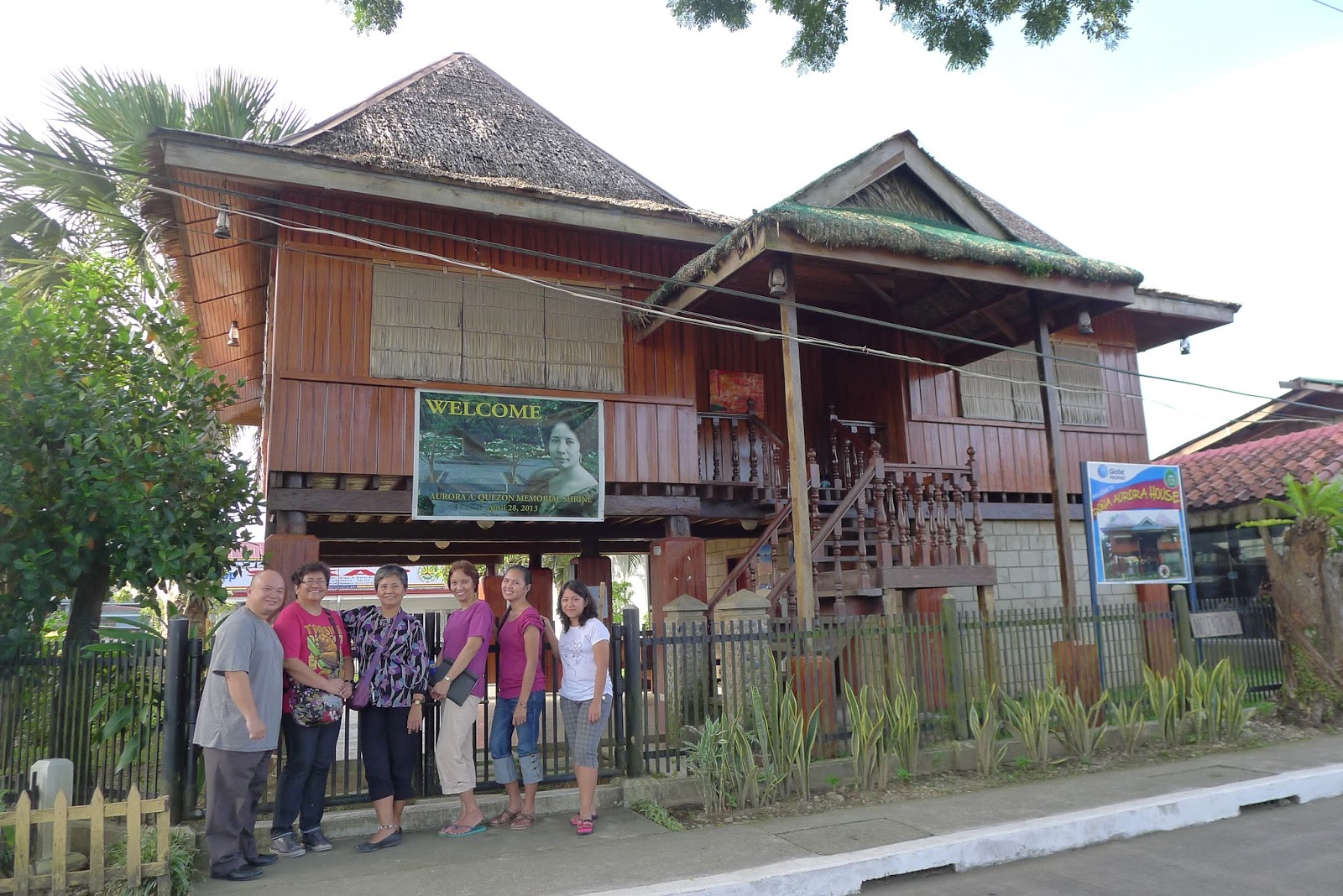
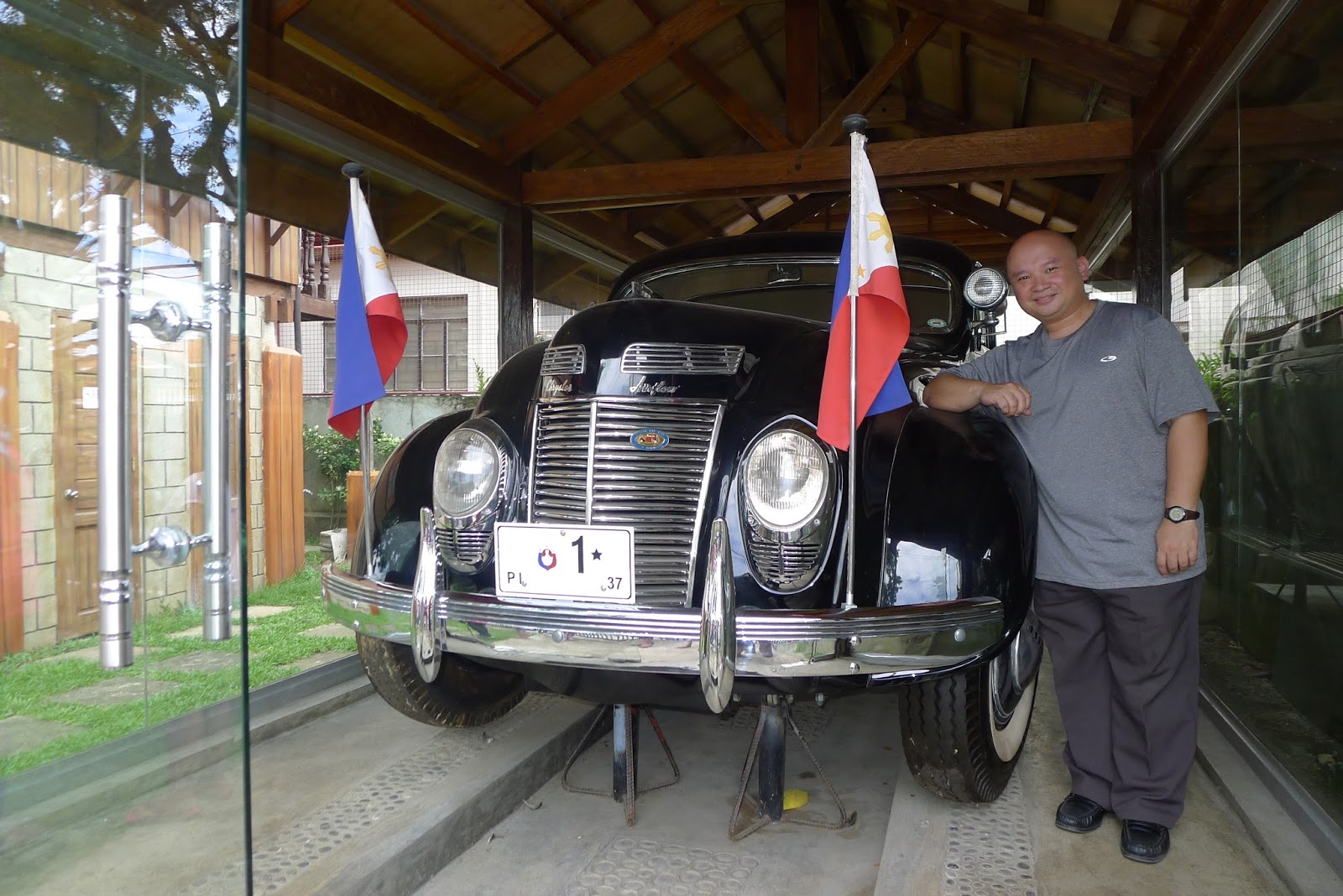
Our next stop was the Doña Aurora Aragon Quezon House, which was located at Rizal St. corner San Luis St. This house was rebuilt in honor of the wife of the late Commonwealth President Manuel L. Quezon. Doña Aurora who was known for her untiring efforts in providing social welfare services especially to the people of Aurora Province. Unfortunately, on this day, they did not allow visitors to enter the house, kaya sa stairs na lang kami, but we saw "The Manuel L. Quezon Presidential Car - 1936 Chrysler Airflow Limousine, which was the official car of the President of the Commonwealth of the Philippines. 


Doña Aurora Quezon House

1936 Chrysler Airflow Limousine

A few steps from the Aurora Quezon House was the Quezon Memorial Park, a quiet park of trees and lawns was developed in honor and in memory of the late president Manuel L. Quezon. A marker fenced by concrete and set on a circular cement platform serves as a landmark of Baler, the birthplace of Quezon.

In here, you would chance upon a Philippine Historical Committee marker, a statue of Quezon, and a 1995 World War II Aurora Veterans monument and memorial. At this point in time, the Museo de Baler was still closed since it opens at 8:00 AM, so in order to kill time, we just visited the Baler Public Market. 

Philippine Historical Committee marker

Manuel L. Quezon statue

World War II Aurora Veterans Monument and Memorial

Museo de Baler

After more than an hour, we went back to the Quezon Memorial Park and saw the General Douglas MacArthur car, a 1937 Cadillac Cabriolet. This car was especially built by General Motors of America for the late President Manuel L. Quezon. It arrived in the Philippines on November 4, 1937. In 1938, it was turned over to Gen. Douglas MacArthur who used it all throughout his tour of duty in the Philippines 

1937 Cadillac Cabriolet

We now entered the Museo de Baler, which houses several historical artifacts that link it closely to the Philippines’ first and longest colonizer, Spain. 

When you enter the museum, you will be asked to register and to pay any amount for donation, and then you are free to roam around. 

Registration Form

1871 Bell

To whom do you pledge allegiance?

Photowall Wackiness!

Since we ate in the early morning, it would be but natural that our precious stomachs would now be grumbling, so we zipped straight to the Sabang Beach area and ate our lunch at the “Hungry Surfer”, the restaurant of Bay’s Inn. We spent a mere total of only Php 1,500.00 for a full set meal, inclusive of Crab and Corn Soup, Buttered Chicken, Sweet and Sour Pork, Crispy Canton, Steamed Rice, Fresh Fruit Plate, and a 1.5 liter Coca-Cola, and we were seven individuals. Most of the food served was very delicious and I recommend this resto for Baler visitors. 

Lunch @ The Hungry Surfer

We went back to the AMCO Beach Resort in order to finally check-in and fix ourselves for the second half of this day’s adventure. Room rate was only Php 950.00, which can accommodate 2-3 persons.

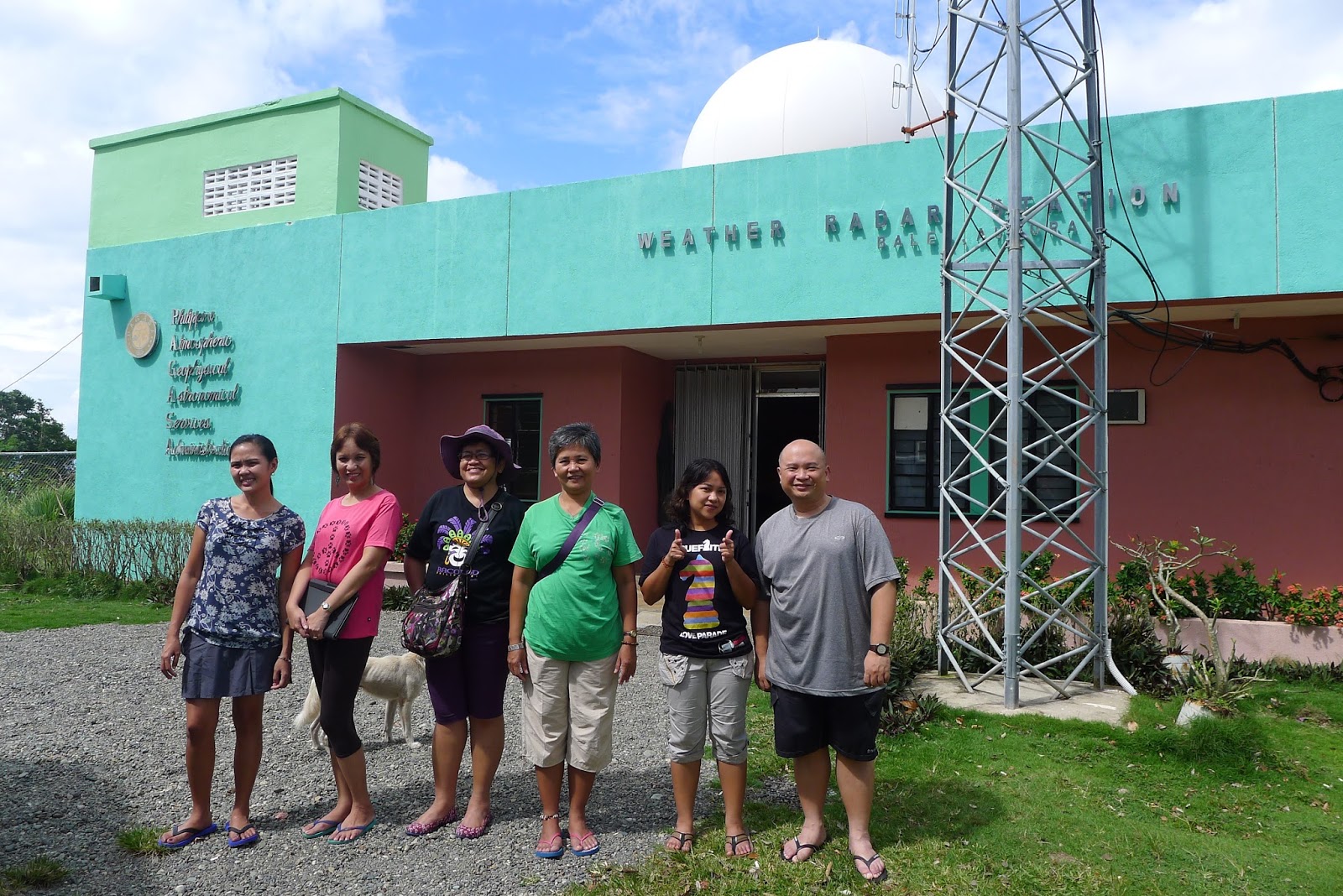
At 2:00 PM, we were now at the PAGASA Baler Radar Station, located at Sitio Diguisit, Barangay Zabali, with an elevation of 178.2 meters above sea level. Before arriving at the site, you will be passing by a very steep one-way road, which means that your vehicle should be really that powerful or else you will be relegated to walk uphill. 

PAGASA Baler Radar Station

This station is only one of the weather stations around the Philippines which collects data to be processed by PAGASA to be useful information, but to be sent and to process a lot of data from several weather stations actually takes time. It actually has a tie up with the Local Government Unit (LGU) of Baler so that they could give real time reports on the weather of Baler and to give warning to the residents if there’s a danger on the coming storm. 

At the top of the station, there is a Doppler Radar, which protects the dish transceiver, because when winds are strong (especially on storms) the dish acts as like a sail and would literally be blown away if it was not for the dome. The dome is made of fiber because metal blocks the radiowaves. You can also view the Pacific Ocean and the Dicasalarin Bay from here.

Doppler Radar

Next chapter was visiting the Aniao Islets. With two of them standing side by side together, looking like twins battling the mighty waves of the Philippine Sea in unity, this is one of the iconic locations in Baler. A great spot for nature photography buffs! 

Aniao Islets

Already covered with wooden slabs, the Ancient Escape Tunnel was used by the people of Baler in the olden days to escape from raiding Moros. 

Ancient Escape Tunnel

A watchtower stands at the back of the tunnel. This is connected to the Santa Isabel Church, a Spanish structure used by the townsfolk to alert them during Moro pirate invasions. The tunnel, by the way, leads up to Ermita Hill where the chapel now stands. 

In December of 1735, a huge tidal wave washed away the entire town of Baler. Thousands of lives were lost except for 7 families who climbed to the top of Ermita Hill and were saved from the wrath of the tsunami. Now these statues serve as a symbol of those who have survived the tragic disaster, and is located at the bottom of the hill. 


Bottom Part of Ermita Hill

Trudging 110 steps to the top, you will be able to view the Pacific Ocean at a viewdeck. You will also see the exit point of the Ancient Escape Tunnel, as well as the Dicasalarin Bay at another viewdeck within the area. 

A view of the Pacific Ocean

Exit Point of the Ancient Escape Tunnel

A view of the Dicasalarin Bay

After feeling a bit exhausted from all the walking, we went to La Cez Food House to savor their Halo-Halo Special for only Php 45.00, and also took photos near an old lighthouse at the Sabang Beach area. 

Facade of La Cez Food House

Halo-Halo Special at Php 45.00

All smiles after the Halo-Halo experience.

Old Lighthouse

Arriving at AMCO Beach Resort before 6:00 PM, most of us slept after a tiring Day 1, and after a few hours, a heavy downpour ensued since there was a Low Pressure Area arriving at that time in Eastern Visayas. 

Waking up at 9:30 PM, we rode our van, since it was still raining hard, and went for dinner at the Aliya Surf Resort, which was just near AMCO. 

We ordered Ensaladang Pako (Php 80.00), Pinakbet (Php 120.00), Pork Sisig (Php 160.00), and Mushroom Soup (Php 120.00), all of which amounted to only Php 960.00 for two sets.

Dinner @ Aliya Surf Resort

.....and that ends Day 1 folks....whew! 

Baler (Aurora) Part 2 of 2