Saturday, March 22, 2014

Pagsanjan (Laguna)


I have been to several places in the Province of Laguna, which boasts of a lot of great tourist spots. Funny thing about this was that, it was only last March 1, 2014 that I finally explored the tourist capital of Laguna, which was the municipality of Pagsanjan. 

Since Pagsanjan has been famous for its Pagsanjan Falls, me and my friends obviously decided to finally visit this town and experience why a lot of people have gone gaga over the so-called “Shooting the rapids” towards the falls. 

To make this trip more comfortable with less hassles, instead of a road trip, we opted to enlist the services of a vendor, TRIPinas Travel and Tour Ventures, which has been my chosen vendor in my past trips to Taal Volcano Island and Mount Pinatubo. 

We first assembled at the McDonald’s branch at the corner EDSA and Buendia at 7:00 AM, and after a brief orientation with the TRIPinas coordinator as well as signing waivers and paying our balances, we then rode a rented van towards our destination. We were told not to give in to requests for tips from certain boatmen since they would be paid a substantial amount from your tour package payment. 

Arriving at the Pagsanjan Falls Lodge and Summer Resort, located in Barangay Pinagsanjan, at 10:00 AM, we then posed for arrival pics and proceeded to the reception area to get our keys for our rented lockers in order to place our things, which we would not need during the trip to the Falls. Make sure to waterproof all the things you would be bringing at this point because you will be 100% soaking wet. 

Arrival at Pagsanjan Falls Lodge

Before we started with our “Rapids experience”, we were all required to wear safety gear, and off we went towards our destination via Bumbungan River, riding on dugout canoes. These are boats made from a hollowed tree trunk, which could accommodate up to three passengers, excluding the two boatmen. 

Dugout Canoes

As the boat initially plied an area called Sitio Cubao, you could see several communities happily indulging in various activities such as swimming, cooking, doing laundry stuff, and other forms of merry-making, even to the extent of greeting visitors from the shore. 

Laundry Time

This was the time wherein I realized that wearing pants was a must due to the heat of the sun burning my legs. I was wearing trek shorts then grrrrrrr. 

Toasted Legs!

Anyway, before entering the Canyon, called the Pagsanjan Gorge Tourist Zone (PGTZ), all boats would make a short stopover at an Entrance Tollgate "Balsa". Yes, they have a tollgate on water.

Entrance Tollgate "Balsa"

Apart from rowing against the current, the boatmen would sometimes literally carry the boat once it passes by protruding rocky areas or narrow pathways with the help of fitted pipes inserted among the rocks. 

Boatmen Guiding the Canoe
 
Reaching the halfway mark at 11:00 AM, we stopped by at an area for picture taking near a store and beside the Talahib Falls, which was the first waterfall encountered by boat riders heading to Pagsanjan Falls.

Talahib Falls

When we reached the so-called Banca Garage, we alighted our canoes and trudged a rocky path towards the Natural Pool, wherein there were balsas waiting to be utilized in order for the tourists to experience crossing a huge waterfall curtain towards the Devil’s Cave.

Before riding the Balsa
 
As we hopped on the balsa, loads of excitement and tension filled us up as we slowly closed in on the Devil’s Cave…What would be the feeling of being “massaged” by cascading water?..Can our waterproof equipment, containing our wallets and cellphones, withstand the might of nature? 

Nearing the Falls

As expected, a myriad of screams enveloped as we entered the curtain…very cold indeed! 

Once inside the Devil’s Cave at 11:30 AM, we all took a dip, but taking good photos in this area was very difficult due to mist coming from the Falls. Utilize only a waterproof camera on a Pagsanjan Falls trip!

Inside the Devil's Cave

Enjoying the experience!

Departure from Devil's Cave

When we went back at the Banca Garage after being completely doused with water, we posed for a farewell shot near the most popular tourist spot in Pagsanjan, and at 12:40 PM, we disembarked our boats back at the Lodge. 

Farewell to the Falls

Mission Accomplished!

Back at the Lodge

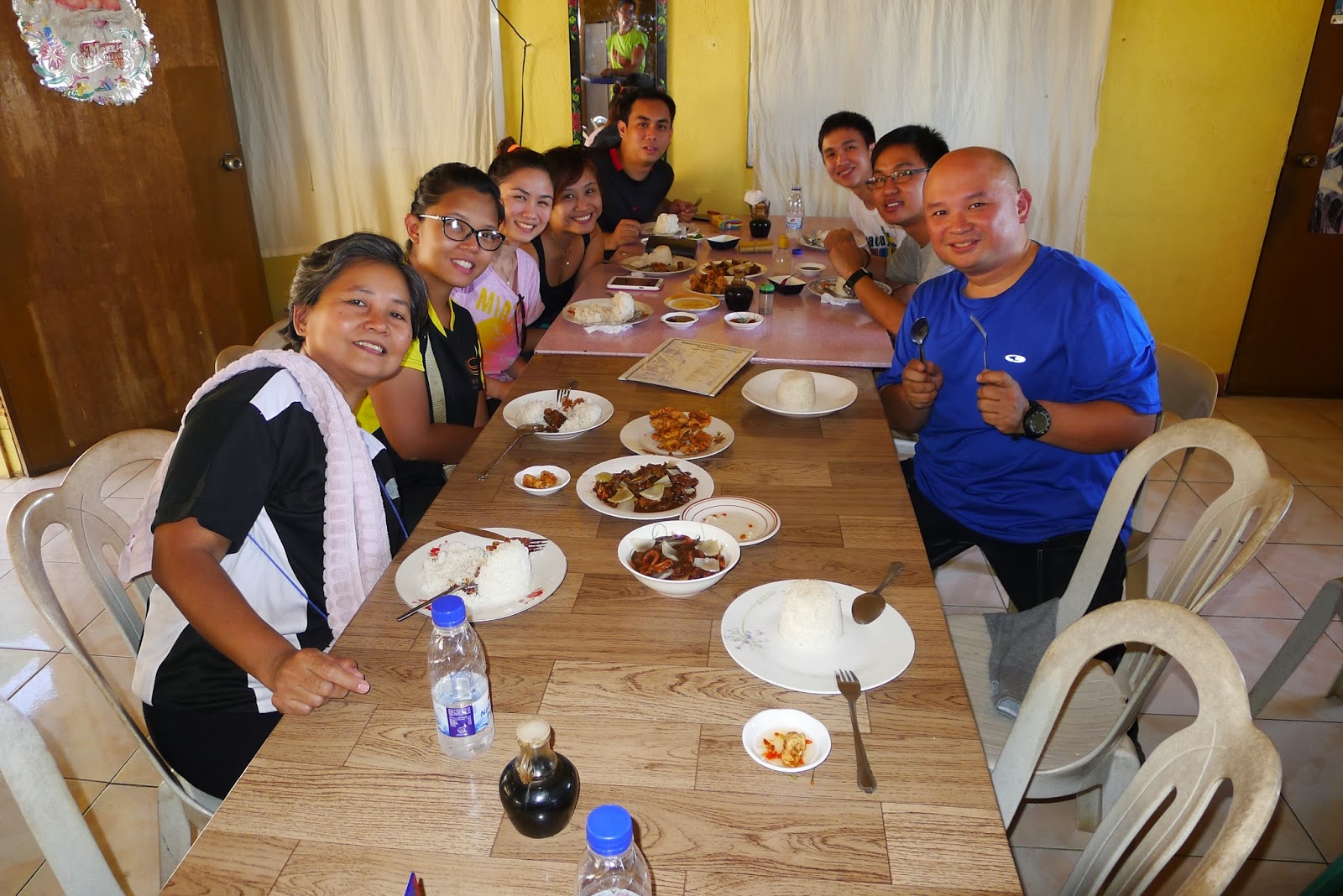
With hunger creeping in, we sped off to eat lunch at the Calle Arco Restaurant along Rizal Street. It is one of the most famous restaurants in Pagsanjan serving Filipino dishes. Calle is Spanish for street and Arco means arch. Calle Arco is located along the street where you can find the town’s arch — Puerta Real.  
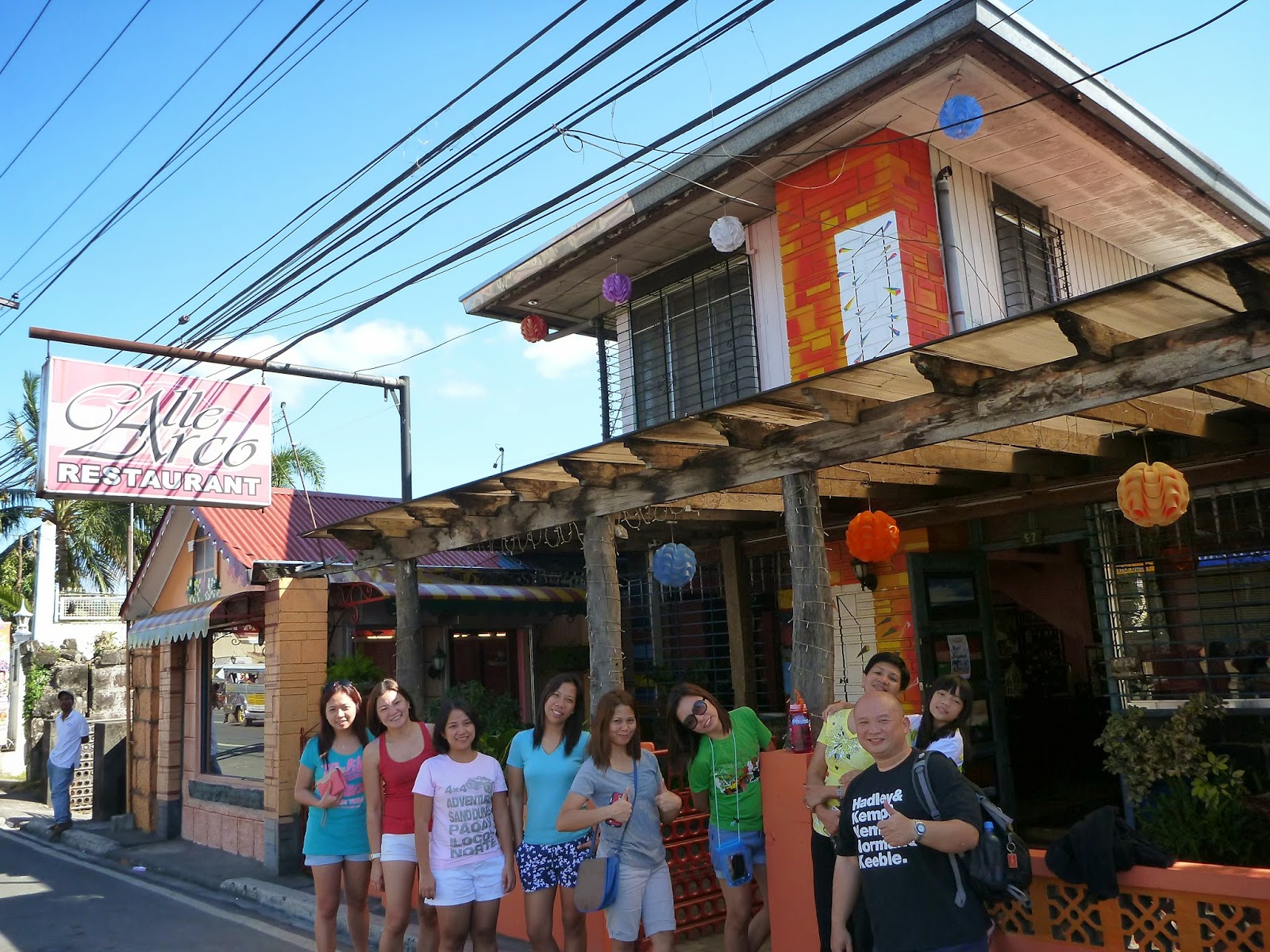
Calle Arco Restaurant
Great nostalgic ambience! 
Paco Salad with Kesong Puti
Pork Binagoongan
Enjoying late lunch

Ronaldo Cabrega, the owner, said that this was their ancestral house they converted into a restaurant and bed and breakfast. 

We ordered their specialties such as the Sinigang na Baka and Langka, Pork Binagoongan, Paco Salad with Kesong Puti, and many more. 

Famous for its majestic falls, Pagsanjan is also home to the miraculous image of Our Lady of Guadalupe. The image was brought to the Philippines in the 17th century by a Mexican missionary and was later on enshrined at the Nuestra Señora de Guadalupe Church in 1687. 

Nuestra Senora de Guadalupe Church

The original church was built in 1668 made of of nipa and bamboo and eventually rebuilt using tiles by Chinese Miguel Guan Co and the chief Alguacil Alferez Alonzo Garcia in 1690. 

We then visited Pagsanjan’s famous Halo-Halo joint. The “Aling Taleng's Halo-Halo” has been in the business since 1933 in Pagsanjan, Laguna. Their Signature Halo-Halo was worth Php 75.00. Sarap indeed!
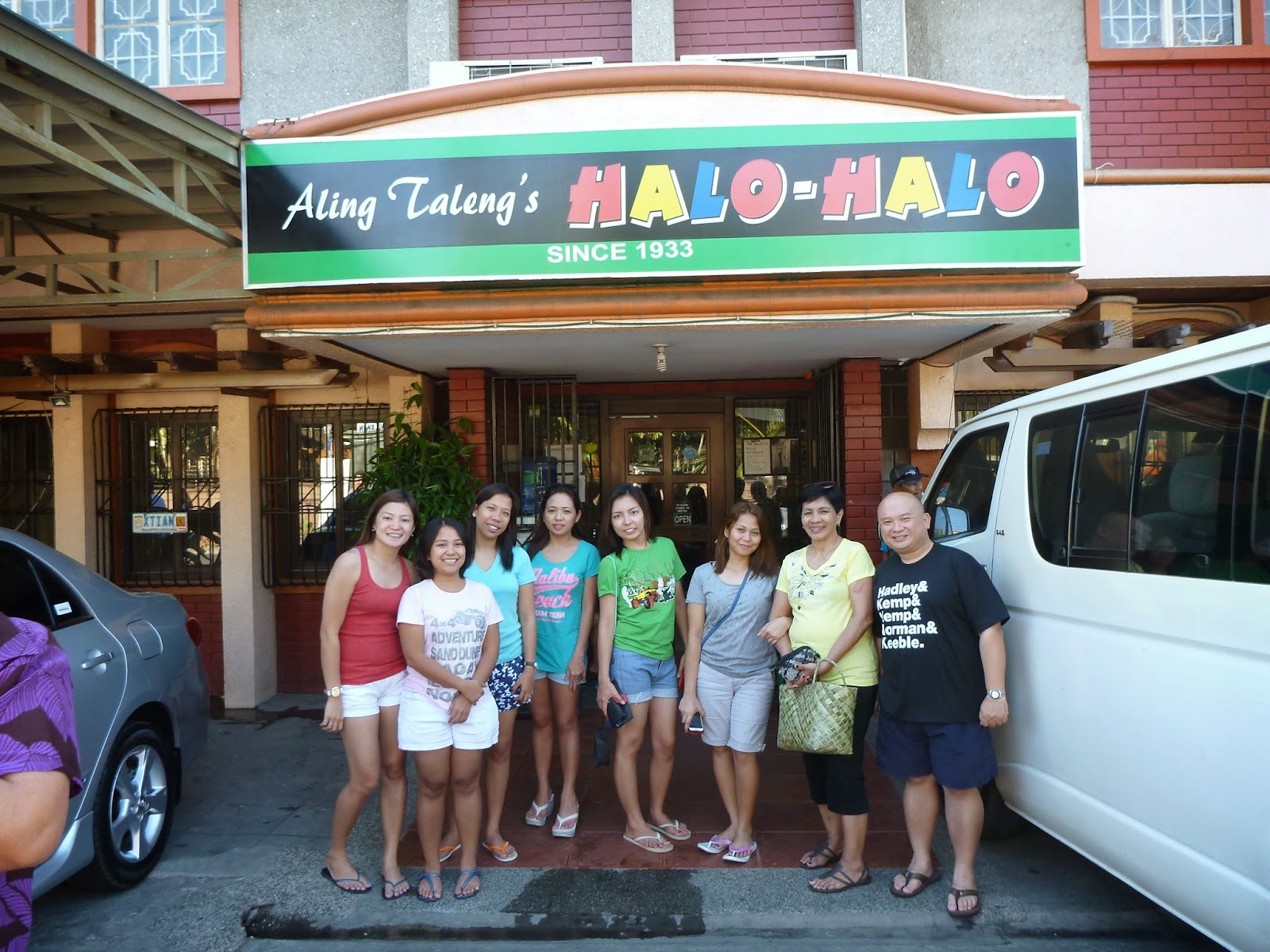
Aling Taleng's Halo-Halo
 
Halo-Halo Experience!

Last but not the least, a Pagsanjan trip would definitely not be complete without a photo right next to the Puerta Real (Town Gate).

Puerta Real
 
This structure is the most strategic and historical landmark of Pagsanjan. This 124 year old town gate was constructed in 1878-1880. It was inaugurated in 1884 by Don Pedro A. Paterno, and was restored in 1975 by then Mayor Gregorio F. Zaide, an internationally known historian. 

This stone gate recalls the legendary miracle of Our Lady of Guadalupe, the town's beloved Patroness. In December 8, 1877, terroristic bandits led by Tankad came to loot and plunder the town, it is said that here they were stopped by a luminous apparition of a beautiful lady holding aloft a shining sword. To express their gratitude, the Pagsanjeños erected the ornate stone gate on the very line drawn by her sword. 

Laguna has always astounded me with its beauty and splendor in various aspects such as nature, its culture, and its people, so if you have not been to the tourist capital of Laguna, you are missing a lot! 

Explore Pinas!

Saturday, February 15, 2014

Mount Gulugod Baboy & Sombrero Island (Mabini, Batangas)


The province of Batangas is such a huge area, which is subdivided into 31 municipalities and 3 cities. Loads of interesting tourist sites abound such as the famous Taal Volcano, Taal Heritage, and several beaches in Nasugbu, Calatagan, and San Juan. 

Located in southern Batangas, one can discover the so-called birthplace of Philippine diving sites, Anilao, Mabini. 

Even though Anilao prides itself of this water-related hobby, a mountain named Gulugod Baboy resides in this area, which my friends and I decided to conquer last February 8, 2014, and to conclude our trip, refreshed ourselves in the “atmosphere” of Sombrero Island. 

Gulugod Baboy, which literally means “pig’s spine,” is a range of minor peaks. 

We arrived at 10:00 AM at Philpan Dive Resort, which was the jump-off point going to Mount Gulugod Baboy.
 
Philpan Dive Resort

Before we started our trek, we first met Jocelyn, our guide, and signed up in a Registration Book at a nearby hut. Fee per head was Php 30.00.

Near the Registration Area

We began our trudge via a long uphill cemented road and stopped to take photos beside a sign which said “This way to Gologod Baboy”, which we believed, would be the start of the summit assault.

Uphill Cemented Road

Start of Summit Assault?
 
After 30 minutes of continuous uphill trekking, we took shelter at a resting station, wherein there was a nearby hut selling Halo-Halo, Buco Juice, and softdrinks…and yes, it was Mountain Dew time for me! 

Resting Station

Refreshments...anyone?

According to some trekkers, Mount Gulugod Baboy has three peaks: Gulugod Baboy, Gitna, and Pinagbanderahan. 

At 12:15 PM, I reached the first peak (460 MASL). In here, you could already view from afar the Maricaban and Sombrero Islands. 

Peak 1: Gulugod Baboy

The famous tree

The next peak (485 MASL) was completed at 12:35 PM, and the highest peak (520 MASL) was finally conquered at 1:00 PM.

Peak 2: Gitna

Peak 3: Pinagbanderahan

Grazing cows and some goats were seen along the way…no pigs though haha. 

Pinagbanderahan has a historical background. It can be translated, “Where the flag was hoisted”, and it commemorates the crash landing of the Japanese in early 1942. In the heat of World War II, Japanese airmen had a mishap and crash landed in the slopes of Gulugod-Baboy. To celebrate their survival, they planted a flag in the summit. Since then, locals called it “Pinagbanderahan”. 

As I descended, I once more dropped by at a resting station for two rounds of Mountain Dew, and at 2:45 PM, we arrived at the Balayan View Restaurant near jump-off point for lunch.
 
Back at the Resting Station

Balayan View Restaurant

We ordered their Spicy Squid, Gising-gising, and Calamares, all of which were their specialties. Beware...the first two were really spicy!
 
Spicy Squid   

Gising-Gising

Calamares

Bon Appetit!

After the sumptuous late lunch, we then proceeded to our next destination to refreshen our tired bodies, Sombrero Island. 

Before boarding our two rented 10-seater boats, we first paid our trek guide Php 500.00 (group fee). 

Nearing Sombrero Island
 
At 4:05 PM, we reached the island and were amazed by the white sand surrounding the area.

Arrival at Sombrero Island
 
The island was just a very simple island, which did not have any facilities. It was like you were in a Survivor TV series. 

For photoshooting purposes, the island had several nice spots though.

Natural Benches

Emergence

The view and the water were great except for some instances where some of us were stung by Jellyfish.

Before we said our goodbyes to the island, we paid the island caretaker Php 150.00 per head, and alighted from our boats after docking at jump-off area. We paid Php 2,500.00 for each boat. 

Farewell Sombrero Island!

Undoubtedly, this trip was one of the best I had since I infused an “exercise” portion in the morning and an aura of relaxation afterwards. 

Explore Pinas!

Sunday, January 26, 2014

Eastern Pampanga (Mexico & Candaba w/ San Fernando Side Trip)


A month ago, my friends and I went on a food trip during the Yuletide season of 2013 in selected cities in the province of Pampanga. It was a great experience visiting the culinary capital of the Philippines as well as attending the Giant Lantern Festival in the Christmas capital of the Philippines. 

Since the places we went then were on the left side portion of the North Luzon Expressway (Angeles, San Fernando, Guagua, and Bacolor) coming from Manila, we now chose to venture in the opposite direction, which would target the cities of Mexico and Candaba. 

Actually, the planned main highlight of this trip, which was done last January 18, 2014, was to visit the famous Candaba Wetlands Bird Sanctuary. 

This is the (2nd) home to a variety of migratory birds during the months of November to February. The birds are plentiful during these months. 

According to various sites, the birds usually appear minutes after sunrise and during late afternoons, so since most of my friends live far from this area, we decided to observe them in the latter option. 

To maximize our day, we first assembled in front of Shakey’s Eton Centris, located in Quezon Avenue, EDSA, Quezon City, and our rented van departed at 7:30 AM towards a side trip to San Fernando

Since most of my friends here have not been to this town, we decided to explore the area for historical structures as well as pasalubong centers. 

We first dropped by at a Bataan Death March stone marker, which was constructed in commemoration of the heroism and greatness of the Filipino fighters during the Japanese occupation in 1942. 

Bataan Death March stone marker

A few steps away from the marker was the historical Old San Fernando Train Station.

Old San Fernando Train Station

The San Fernando Train Station is a historical landmark in the City of San Fernando, Pampanga. Inaugurated by Governor-General Eulogio Despujol and Bernardino Nozaleda, Archbishop of Manila, on February 23, 1892. Jose P. Rizal debarked from the station on June 27, 1892 and again the next day en route to Bacolor. During the Death March in April 1942, it was the ending point of the 102-km Bataan Death March, from which Filipino and American prisoners-of-war were carted to Capas, Tarlac en route to their final destination, Camp O’Donnell. 

For its security and protection from vandals, the place was not open to the public, but fortunately, the caretaker, Mr. Fernando V. Sanchez Jr., was there to provide us some historical information about the structure as well as opening the gates so we could view what was inside the station.  

Main Entrance of the Train Station

Jumpshot time!

All you could see inside were statues depicting the Japanese Occupation, Jose Rizal sitting on a bench, and Ninoy & Cory Aquino.

Japanese Occupation Statues
 
Jose Rizal Statue

Ninoy & Cory Aquino Statues

Before departing the establishment, we all posed beside a 102-km Bataan Death March marker.
 
Bataan Death March Marker

During the Death March in April 1942, it was the ending point of the 102-km Bataan Death March, from which Filipino and American prisoners-of-war were carted to Capas, Tarlac en route to their final destination, Camp O’Donnell. 

At A. Consunji Street, you could view a row of several ancestral houses and buildings.

Lazatin House

The Lazatin House was built in 1925 by the couple Serafin Lazatin y Ocampo, president of the San Fernando Electric Light & Power Company (SFELAPCO), and Encarnacion Singian y Torres. During the Second World War, it was appropriated by the Japanese Imperial Army to serve as a residence of its 14th Army Commander, General Masaharu Homma, in San Fernando, Pampanga.

Consunji House

The Consunji House was the residence of Antonio E. Consunji, the gobernadorcillo of San Fernando in 1892. He was removed from office by the ruling Spanish government because of his attendance when Jose P. Rizal visited the town in June of that year. He became the presidente municipal of San Fernando during the Philippine Revolution from 1898-1899.

Tabacalera House

The Tabacalera House is a heritage house in the City of San Fernando, Pampanga. Built by Tabacalera owned by Don Ramon Lopez. The first floor of the house served as the office of Tabacalera. The property was owned by Simeon Ocampo. During the Japanese Occupation, it was sequestered by the Japanese Imperial Army together with other residences in San Fernando, and served as the headquarters of the Kempeitai.

Hizon-Ocampo House

The Hizon-Ocampo House is a heritage house in the City of San Fernando, Pampanga. The first residence of Anacleto Hizon and Victoria Singian de Miranda, it has inherited by their daughter Leoncia Hizon who was married to Basilio Ocampo, gobernadorcillo of San Fernando. Among their children was renowned architect Fernando H. Ocampo.

Hizon-Singian House

The Hizon-Singian House is a heritage house located in the City of San Fernando, Pampanga. Built in 1870 by the couple Don Anacleto Hizon, gobernadorcillo of San Fernando from 1877-1879 and 1886-1887, and Victoria Singian de Miranda y de Ocampo. Inherited by their daughter Victoria Hizon y Singian who was married to Godofredo Rodriguez y Yabut from Bacolor. It was occupied during the 1896 revolution by Spanish General Antonio Ruiz Serralde, appropriated by the Japanese Imperial Army to serve as a military hospital and barracks from 1943 to 1944, and served as headquarters of American General Walter Krueger of the 6th American Army during the liberation period until the end of 1945. Inherited by their son, the late Gerry Catalino Rodriguez Y Hizon, former president of the Pampanga Sugar Development Company (PASUDECO), who was married to Aurora Angeles. This bahay na bato of the Spanish colonial period was declared a Heritage House by the National Historical Institute on 27 January 2003 by virtue of Resolution No. 4, S. 2003.

Santos-Hizon House

The Santos-Hizon House is a heritage house in the City of San Fernando, Pampanga. A turn-of-the-century Victorian-style house was built by the couple Teodoro Santos, Jr. and Africa Ventura, it was later purchased by Maria Salome Hizon, a volunteer of the Red Cross during the Philippine Revolution. The property was acquired by her brother Ramon Hizon and is currently owned by the heirs of his son Augusto Hizon.

Pampanga Lodge & Restaurant

Across the street from the cathedral was the old Pampanga Hotel, now the Pampanga Lodge and Restaurant. This was actually the first site of the Pampanga High School when it first opened in 1908. It was also used as the Harvardian College, then the Pampanga Hotel and Panciteria, and now the Pampanga Lodge and Restaurant. It held the distinct honor of hosting Gen. Douglas MacArthur for one night.

For our pasalubong shopping, we dropped by Aurely’s Bakeshop, located in Mac Arthur Highway. One of their specialties was the Brazo De Mercedes.

Aurely's Bakeshop

Another place for goodies, still in San Fernando, was Nathaniel’s Bakeshop, situated in KM69 Jose Abad Santos Avenue, in Barangay Dolores. In here, the bestsellers were the Puto Pao (Puto w/ Asado filling topped w/ salted egg), Buko Pandan Salad, and the Chicken Pie.
 
Nathaniel's Bakeshop

Puto Pao: The Bestseller!

Next stop was the town of Mexico, were we visited the Sta. Monica Parish Church. It was built by Fr. Jose dela Cruz in 1665, but was destroyed during the Second World War. What remains is just the Belfry Tower of the former Augustinian-run church.

Sta. Monica Church / 17th Century Belltower / St. Benedict's Institution de Mexico

Near the 17th century Belltower of Mexico, one can also find the St. Benedict’s Institution de Mexico, an Augustinian convent that was constructed in time with the Sta. Monica Parish Church in 1665. Although Augustinian records such as the Estado of 1612 indicates that Mexico has one convent and two priests during that time. 

Mexico is also known for the San Jose Matulid chapel, which is believed to be the oldest Catholic chapel (commonly called as visitas by the locals) in Pampanga. Based on the accounts of Augustinian friars, the visitas of Masansan and Matulid were established along with the town of Nuevo Mexico (now Mexico) in April 24, 1581. Although there is no direct record of the exact date of construction of the San Jose Matulid chapel, the locals claim that it is older than the Sta. Monica Parish Church.

San Jose Matulid Chapel

With hunger creeping in, we then visited one of the most famous eateries in Pampanga, located at 174 Jose Abad Santos Street, Atching Lillian’s.
 
Atching Lillian's home

This dining place was located at the grounds of the ancestral house of Pampanga’s famous food historian and cook, Atching (Chinese ‘atsi’ for elder sister) Lilian Lising-Borromeo. In addition, her home was hailed as Mexico Pampanga’s center of culinary attraction. 

As we entered her premises at around past 12:00 noon, we were cordially greeted by the “celebrity”…a very very hospitable lady!

with Atching Lillian Borromeo

Luckily, our dining seat area was located near several items of yore, such as the various awards and certificates given to her, as well as some newspaper and magazine clippings of her appearances and similar stuff. You could also view old kitchen equipments passed on to her by ancestors, some of which dated back to a hundred years old. 

Awards & Certificates

Awards & Certificates

Various Cookie Molds from different towns

Demonstration Table

In here, the food was served buffet style, amounting to Php 500.00 per head.
 
Sisig

Pandan Juice

Lunchtime!

After we ate, she sat down with us and did some storytelling about the place, some aspects of her life, as well as bits of history on Pampanga cuisine. Such a warm and accommodating person! 


After several minutes, she demonstrated to all her customers on how to make her famous San Nicolas cookies. She is prominently known to be the best in producing these cookies. The recipe, named after the patron saint of bakers, has been passed down to the Filipino women by the Spanish friars and the Dominican sisters during the Spanish occupation.

San Nicolas Cookie Making Demonstration

When the “show” was done, she invited some of her customers to have a hands-on in making these cookies.

 Atching Lillian teaching my friends in the cookie making

Atching Lillian has made her life mission to share her family’s recipes in order to preserve and to not let time obscure her ancestors’ hard work and dedication to cooking.

Farewell Group Shot with an Icon

Departing from her home at 2:30 PM, we then proceeded to our main target destination in Candaba, the Candaba Wetlands Bird Sanctuary

While we were passing by the dirt road, we saw several flocks of birds from a distance, as well as the imposing presence of Mount Arayat, and parked at the resthouse of former Candaba Mayor Jerry Pelayo. 

Mount Arayat from a distance

Flocks of Birds

Based on previous travel blogs related to this area, you will be required to pay a Php 150.00 entrance fee for the maintenance of the place. Just in case you would need a guide, a payment of Php 400.00-500.00 per head would be the cost. Rooms to be rented at the resthouse would amount from Php 900.00-2500.00 per room. Also, In order to have a good view of the birds, huge bamboo walls were situated with small holes for viewing purposes to lessen the incidence of disturbance from humans. 

As we alighted from our vehicle, lo and behold, all those were gone.

Yup...the Bamboo Walls are gone!
  
Group Shot with Mount Arayat

The place now can be visited easily by the public, which means you would be seeing some trash along the grounds. You would be left on your own since there was already no guide. The resthouse has been deserted and was only guarded by a caretaker. Birds can only be seen at a long distance due to the fact that seeing humans (bamboo walls were destroyed) drives them away, that is why for those who are planning to visit this place and do bird-watching, make sure to bring a camera with a very good zooming capability.

Final Group Shot in front of the Resthouse

It was such a sad sight seeing this tourist destination “deteriorate” as compared to the past. 

Nevertheless, it was still a good place worth “discovering”. 

Explore Pinas!